
Key facts: Downtown Mesa
- Mesa was founded in 1878, and its original townsite around Main Street holds the city's oldest residential streets.
- Homes near downtown range from early twentieth-century bungalows to post-war painted concrete block houses.
- Paint in Mesa homes from before 1978 may contain lead, so disturbing it requires lead-safe methods [1].
- Older wiring and panels should be inspected by a licensed electrician after any fire.
- The covered ZIP codes for Downtown Mesa on this site are 85201 and 85203.
Covered area
ZIP codes covered in Downtown Mesa
Calls from these Downtown Mesa ZIP codes can reach an independent restoration contractor working in the area.
- 85201 (Downtown Mesa)West and central downtown Mesa neighborhoods north and south of Main Street.
- 85203 (Downtown Mesa)Neighborhoods north and east of downtown, including streets near the temple and toward Lehi.
About Downtown Mesa
Where Mesa started
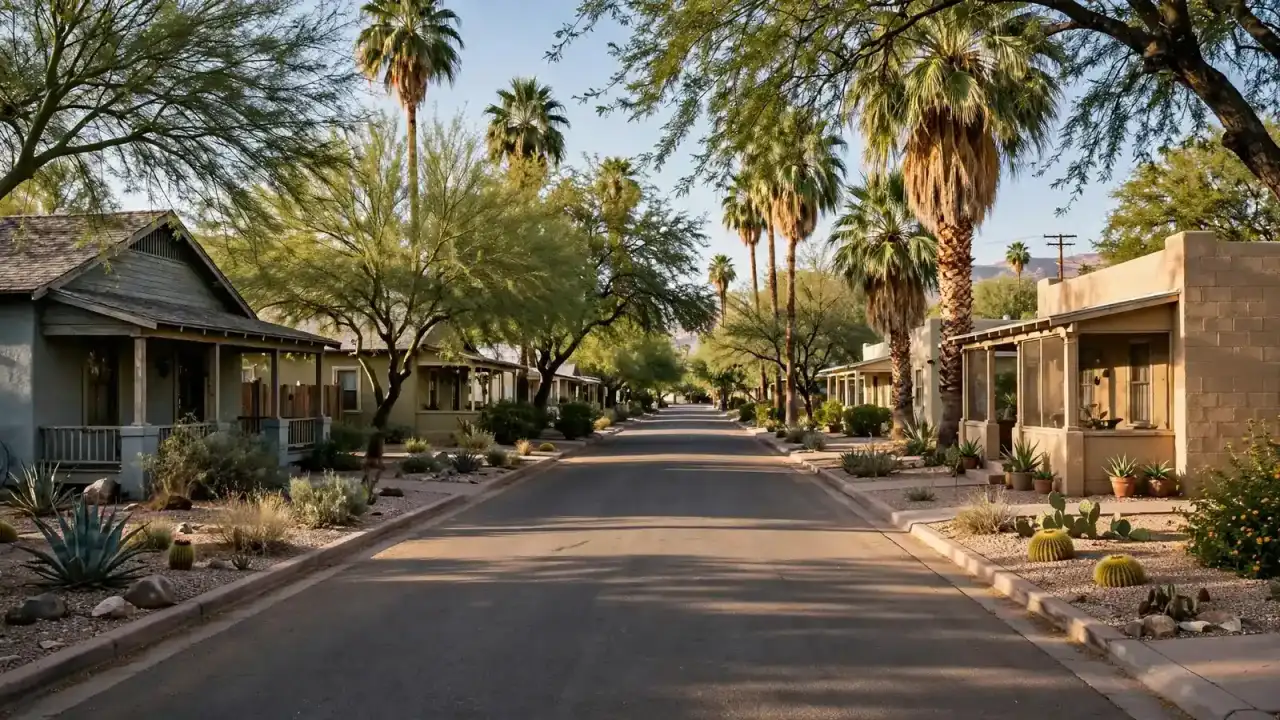
Mesa was founded in 1878 by settlers who laid out a square townsite on the mesa above the Salt River, with wide streets and irrigation canals. The grid around Main Street became downtown, and the neighborhoods around it grew through the early and middle twentieth century. Landmarks such as the Mesa Arizona Temple, completed in the 1920s, anchor some of the oldest residential streets.
Housing near downtown is varied. There are early bungalows and cottages with wood floors and plaster or older drywall, brick homes, and many post-war houses built of concrete block, often painted inside and out. Over the decades most have been updated, with new kitchens, cooling systems and additions, while original structure and materials often remain behind the newer finishes. Some streets fall within historic districts.
In recent years downtown has seen light rail, new apartments and cultural venues alongside long-standing neighborhoods. That mix means fire restoration here ranges from century-old houses to new multifamily buildings.
Construction
Downtown Mesa construction details
Painted concrete block (Downtown Mesa)
Fire-resistant and sturdy but porous; soot and odor settle into the texture and mortar joints.
Early bungalows and cottages
Wood floors, older plaster or drywall and wood trim need gentle cleaning.
Older electrical systems
Original or extended wiring needs an electrician's check after heat or water.
Lead paint on older surfaces
Exterior trim, windows and doors on pre-1978 homes may carry lead paint.
Additions over the years
Seams between original and added sections let smoke and water travel.
Evaporative coolers
Some older homes still use them, and they spread smoke when running.
Smoke paths
How smoke and soot behave in older downtown homes
Older houses tend to be smaller, with rooms closer together, so smoke from a kitchen or bedroom fire reaches the whole house quickly. Attics in early homes may be low and partly floored, and additions may have separate roof spaces connected to the original attic through gaps. Smoke follows those connections.
Painted block walls hold soot in their texture; plaster takes residue into its surface; wood floors absorb smoke at the seams. Evaporative coolers, still common in some older homes, push smoke through every room if they were running.
Cleaning these homes takes patience: dry methods first, then cleaners suited to each surface, and sealing where staining remains.
Assessment
What a contractor should check in a Downtown Mesa home
- 1
Electrical (Downtown Mesa)
A licensed electrician checks the panel and affected circuits first.
- 2
Older materials (Downtown Mesa)
Paint, textures and some flooring sampled before disturbance.
- 3
Walls
Block, plaster or drywall, each needing its own method.
- 4
Attic and additions
Smoke paths through low attics and seams.
- 5
Cooling
Evaporative cooler pads and ducts, or refrigerated air ducts.
- 6
Exterior
Smoke staining on block or stucco and condition of wood trim.
What you might see
Downtown Mesa fire damage clues
| What you notice | Likely reason | What to ask |
|---|---|---|
| Black in block wall texture | Soot settled into porous masonry | How will block be cleaned and sealed? |
| Peeling paint on trim after the fire | Heat on old paint layers | Will lead-safe methods be used? |
| Breakers tripping in other rooms | Older wiring affected | Has an electrician inspected? |
| Smell from an addition | Smoke along the seam | Is the junction cavity affected? |
| Smoke everywhere after the cooler ran | Cooler pushed smoke through the house | Should pads and ducts be replaced? |
| Cupped wood floors | Firefighting water | Can the floor be dried and refinished? |
Older materials
Lead paint and asbestos
Homes built before 1978 may contain lead-based paint, especially on exterior trim, windows and doors. Fire, water and repairs can disturb it. Under the EPA's Renovation, Repair and Painting Rule, contractors working on pre-1978 homes must follow lead-safe practices when disturbing painted surfaces above set limits [1].
Older homes may also contain asbestos in some textures, floor tiles and adhesives. The EPA advises testing suspect materials before disturbing them [2]. Ask the contractor whether they are lead-safe certified and how they handle testing.
Restoration
How restoration usually runs downtown
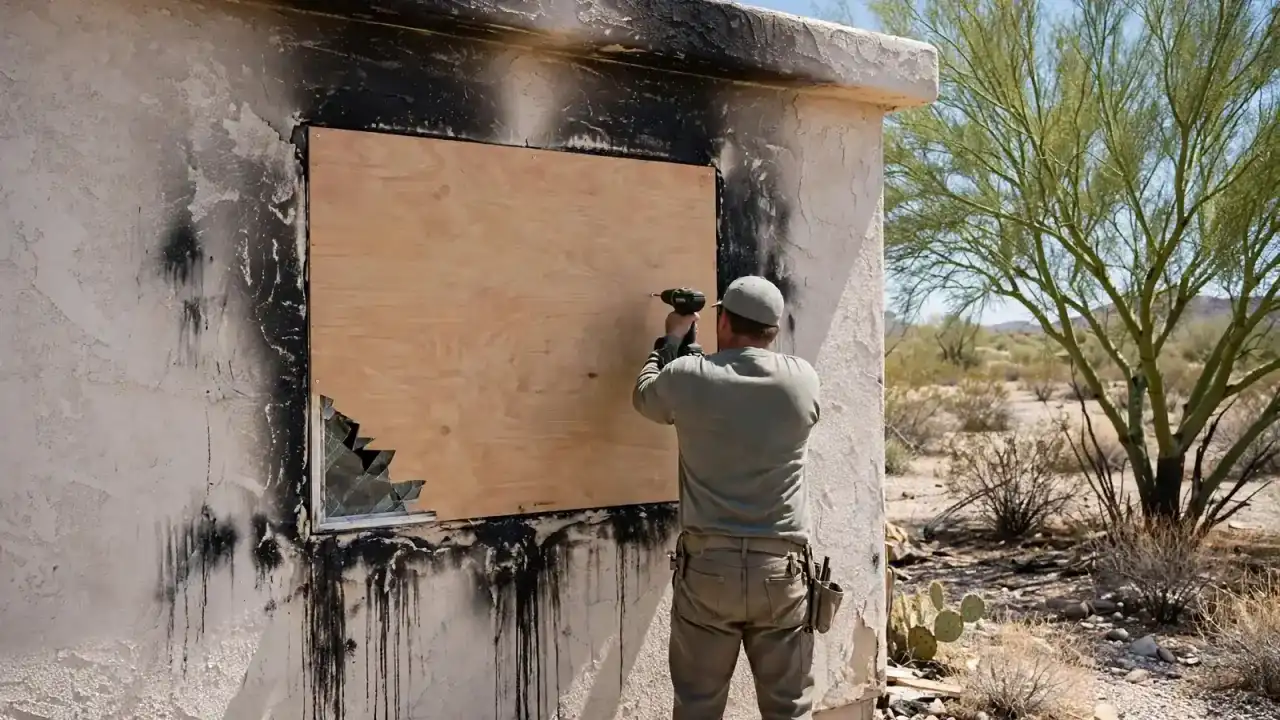
Securing these homes means boarding windows in block or frame walls with methods that avoid unnecessary damage and tarping roofs that may have several layers of past repairs. Drying covers slab or wood floors and the base of block walls.
Cleaning uses masonry-safe methods on block, gentle methods on plaster and wood, and lead-safe practices where old paint is disturbed. Odor work includes the attic, any additions and the cooling system. Repairs need City of Mesa permits for regulated work, and properties in historic districts may need review for exterior changes.
Historic character
Historic streets and exterior repairs
Some downtown Mesa streets fall within designated historic districts, where exterior changes may need review by the city's historic preservation staff. Temporary board-up is protection, not a change to the house, but permanent repairs to windows, doors, roofs and facades may need approval.
Contact the city early if your home is in a historic district, and tell the contractor so their scope reflects any requirements. Repairing original windows rather than replacing them is often preferred.
- Check if your street is a historic district
- Tell the contractor early
- Ask about window repair
- Allow time for review
Newer housing
Light rail, apartments and newer downtown buildings
Downtown Mesa now includes apartments and townhomes near the light rail line, many with fire sprinklers and modern separations between units. A fire in one unit can still send smoke and water into others through corridors and floors. Residents should notify building management right away; the building owner usually insures the structure, while tenants rely on renters insurance for belongings and temporary housing.
Climate
Heat, monsoon and older roofs
Older homes often have less insulation, and a house without cooling after a summer fire gets very hot quickly, driving odor out of materials. Monsoon storms can push rain through older or fire-damaged roofs. Mature trees on older streets shade homes but can drop limbs on weakened roofs during storms.
Prevention
Reducing fire risk in an older Downtown Mesa home
- Have the wiring evaluatedAn electrician can find outdated or overloaded circuits.
- Avoid extension cord overloadsOlder homes often have few outlets.
- Maintain the evaporative coolerKeep motors and wiring in good condition.
- Install smoke alarms in every bedroomOlder homes may have too few.
- Keep space heaters clear (Downtown Mesa)Three feet from anything that burns.
Week one
A typical first week after a Downtown Mesa fire
- 1
Downtown day 1
Fire department release, insurer notified, house secured, photos taken.
- 2
Downtown days 1-2
Electrician inspects; water extracted; drying started.
- 3
Downtown days 2-3
Older materials tested; contents sorted.
- 4
Downtown days 3-5
Drying monitored; attic, additions and cooler checked.
- 5
End of the first downtown week
Scope agreed, including lead-safe work and any historic review.
Services
Services Downtown Mesa homeowners ask about
Soot on block walls
Cleaning porous masonry and plaster.
Read moreSmoke through older homes
Cleaning compact layouts.
Read moreElectrical fires (Downtown Mesa)
Warning signs and what to do.
Read moreHelping older relatives (Downtown Mesa)
Practical help for families.
Read more
Block construction
Painted block walls up close
Concrete block became the standard way to build modest homes in Mesa after the Second World War. Blocks were laid with mortar joints, then often painted inside and out, sometimes with a skim of plaster or stucco over the outside. Block does not burn and often survives a fire structurally, which is a real advantage. But its face is porous and pitted, and every mortar joint is a groove where soot collects.
Paint helps, because it seals some of the pores, but heavy smoke still bonds to it and leaves a grey or yellow cast that ordinary washing does not lift. Cleaning usually starts with HEPA vacuuming and dry sponging, moves on to masonry-safe detergents worked in with soft brushes, and ends with careful rinsing using as little water as possible. Where a shadow remains, a stain- and odor-blocking primer goes on before repainting.
If drywall was furred out over block walls during a remodel, there is a narrow cavity between the two. Smoke and water can collect in that space, so contractors may open it to dry and clean behind.
Remodels
Kitchens and bathrooms in older homes
Kitchens and bathrooms are the rooms most often remodeled in older downtown homes, so a kitchen fire may involve newer cabinets and appliances set inside an old structure with block or plaster walls and original ceilings. Smoke from the kitchen spreads into rooms with original finishes, and grease-laden residue from cooking clings to old paint and woodwork.
Cleaning has to suit both the new and the old: degreasers appropriate to modern cabinets, gentler methods for older painted trim and plaster, and lead-safe practices wherever old paint is disturbed. Range hoods in older homes may vent through walls or roofs not designed for them, and their ducts should be inspected after a kitchen fire.
Floors
Pier foundations, slabs and wood floors
Most downtown Mesa homes sit on concrete slabs, but some of the earliest houses have raised wood floors over a shallow crawlspace or stem walls. Water from firefighting runs down through wood floors into the space beneath, where it can stay for a long time. Drying those homes means drying under the floor as well as the rooms.
Original hardwood or pine floors, sometimes hidden under carpet, cup when wet. Dried carefully, they often flatten enough to be sanded and refinished. Boards that charred or split are replaced with matching wood where possible.
Close quarters
Neighbors close by on older streets
Lots on older downtown streets can be narrow, with houses close together and detached garages or sheds at the back. A fire next door can crack windows, scorch block or stucco and push smoke into your attic and through evaporative coolers. After a nearby fire, check the facing side of the house, the attic and the cooler pads, and photograph damage for your insurer.
Rentals
Renters and owners
Many homes near downtown Mesa are rentals. Tenants should notify the landlord immediately after a fire. The building is usually the owner's responsibility, while tenants' belongings and extra living expenses depend on renters insurance. Owners should document each unit separately, coordinate access for contractors and keep tenants informed about timelines.
Clean or replace
What usually happens to older downtown materials
| Material | Usual outcome | Note |
|---|---|---|
| Painted block walls | Cleaned, sealed and repainted | Masonry-safe methods |
| Plaster walls | Cleaned, sealed, cracks repaired | Lead-safe practices on old paint |
| Original wood floors | Dried and refinished | Burned boards swapped out |
| Older ceiling textures | Tested, then cleaned or removed | May contain asbestos |
| Wood windows and trim | Repaired and repainted | Lead-safe methods |
| Cooler pads | Replaced | Hold smoke and soot |
Heating
Space heaters and winter fires
Older homes are more likely to rely on space heaters or older gas wall heaters on cool winter nights. Heating equipment is a common cause of home fires when something that can burn is too close. After a heating-related fire, the heater, its gas supply or electrical circuit and any vent should be inspected before use, and the room cleaned for soot and odor. If soot appears around a gas heater with no fire, stop using it and have it checked for incomplete combustion and carbon monoxide.
Outbuildings
Detached garages, sheds and alley access
Some downtown lots have detached garages, sheds or workshops at the back, sometimes reached from an alley. These outbuildings often hold lawn equipment, fuel, paint and tools, and they can burn intensely. A fire in one can send smoke into the house through open windows and attic vents and scorch the back of the house with radiant heat.
After an outbuilding fire, check the house for smoke and heat damage as well as the outbuilding itself. Fuel cans, propane and chemicals should be left for professionals. Debris removal from alley-access lots may need planning for where a dumpster can go.
Claims
Keeping records for an older home's claim
Older homes can raise questions during a claim: materials that are no longer made, code upgrades required when parts are rebuilt, and conditions that existed before the fire. Photograph everything before cleanup and note which parts of the house are original and which were updated. Ask your adjuster how your policy handles matching older materials and code-required upgrades, since many policies include some ordinance or law coverage with limits.
Keep receipts for temporary housing, meals and other spending caused by being out of the house, and a log of every conversation with the insurer.
Households
When older relatives live downtown
Many long-time residents of downtown Mesa are older adults who have lived in their homes for decades. Smoke residue and cleanup work are harder on older people, especially with heart or lung conditions. Temporary housing during the heavier stages is usually wiser, and family members can help with paperwork and decisions. Our guide on helping older relatives after a fire covers this in more detail.
Coolers
Evaporative coolers in older downtown homes
Evaporative coolers draw outside air through wet pads and push it through the house, relying on open windows or relief vents to let it out. If a cooler was running during a fire, it can spread smoke rapidly to every room it serves. If the fire was outside, at a neighbor's house or a nearby building, it can draw smoke and ash straight in.
After a fire, cooler pads hold smoke odor and soot and should be replaced, and the cooler housing and any ducts cleaned. Homes with both a cooler and refrigerated air have two air paths to check. Tell the contractor which systems your home has and whether either was running.
FAQ
Downtown Mesa fire restoration questions
Does this line cover Downtown Mesa?
Yes. Calls from ZIP codes 85201 and 85203 can reach an independent restoration contractor serving the area.
Can soot be cleaned off painted block in Downtown Mesa?
Usually, with masonry-safe methods, followed by sealing and repainting.
Is lead paint a concern in my older home?
In homes built before 1978, yes. Contractors disturbing painted surfaces should follow lead-safe practices.
Is my old wiring safe after the fire?
A licensed electrician should look it over before affected circuits are energized again.
Do I need approval to repair a historic home?
If your home is in a historic district, exterior changes may need city review. Ask the city early.
Can wood floors be saved?
Often. Floors dried promptly can usually be sanded and refinished.
Should I replace my evaporative cooler pads?
Yes, after any fire. Pads absorb smoke and blow it back into the house.
Do I need permits to rebuild in Downtown Mesa?
Regulated repair work in Mesa generally needs City of Mesa permits, including for homes in Downtown Mesa.
Can my block walls be painted right after cleaning?
Only once they are dry and sealed. Paint over damp block or residue can blister or let stains bleed through.
I rent near downtown. Who arranges repairs?
Usually the owner. Tell your landlord right away and contact your renters insurer.
Is there a crawlspace under my older home?
Some early homes have raised floors. If water went through the floor, the space below needs drying.
Can old wood windows be repaired?
Often. Glass, sashes and frames can be repaired and repainted with lead-safe methods.
Should I use my wall heater after the fire?
Not until it has been inspected, and make sure carbon monoxide alarms are working.
Can a fire in my neighbor's garage affect my house?
Yes. Smoke and radiant heat can reach your house; check the facing wall, windows and attic.
Will my insurer cover code upgrades?
Ordinance or law coverage is common but limited; your adjuster can explain yours.
Can soot get into my cooler ducts?
Yes, if the cooler ran during or after the fire. Ducts and housing are cleaned and pads replaced.
Are older plaster ceilings a falling risk after firefighting?
Wet plaster can loosen from its lath. Stay out from under any sagging or cracked ceiling until it is secured.
Do I need to replace all my windows?
Usually only those cracked by heat. Others are cleaned; original windows may be repairable.
Should I keep smoky family photos?
Yes, set them aside dry. Specialists can often clean photographs and documents.
Can downtown apartment residents use this line?
Yes, if the address is in a covered ZIP code. Tenants should also notify building management right away.
Is it safe to stay nearby during repairs?
Usually, but keep away from the house during demolition and odor treatments.