
Key facts: Candle and holiday fire cleanup
- Candles are a common cause of home fires, often when left unattended or near things that burn.
- Even small fires can spread soot and smoke film through several rooms.
- Dry methods should be used on soot before wet cleaning.
- Smoke residue on fabrics and upholstery usually needs professional cleaning.
Background
Why small fires leave big messes
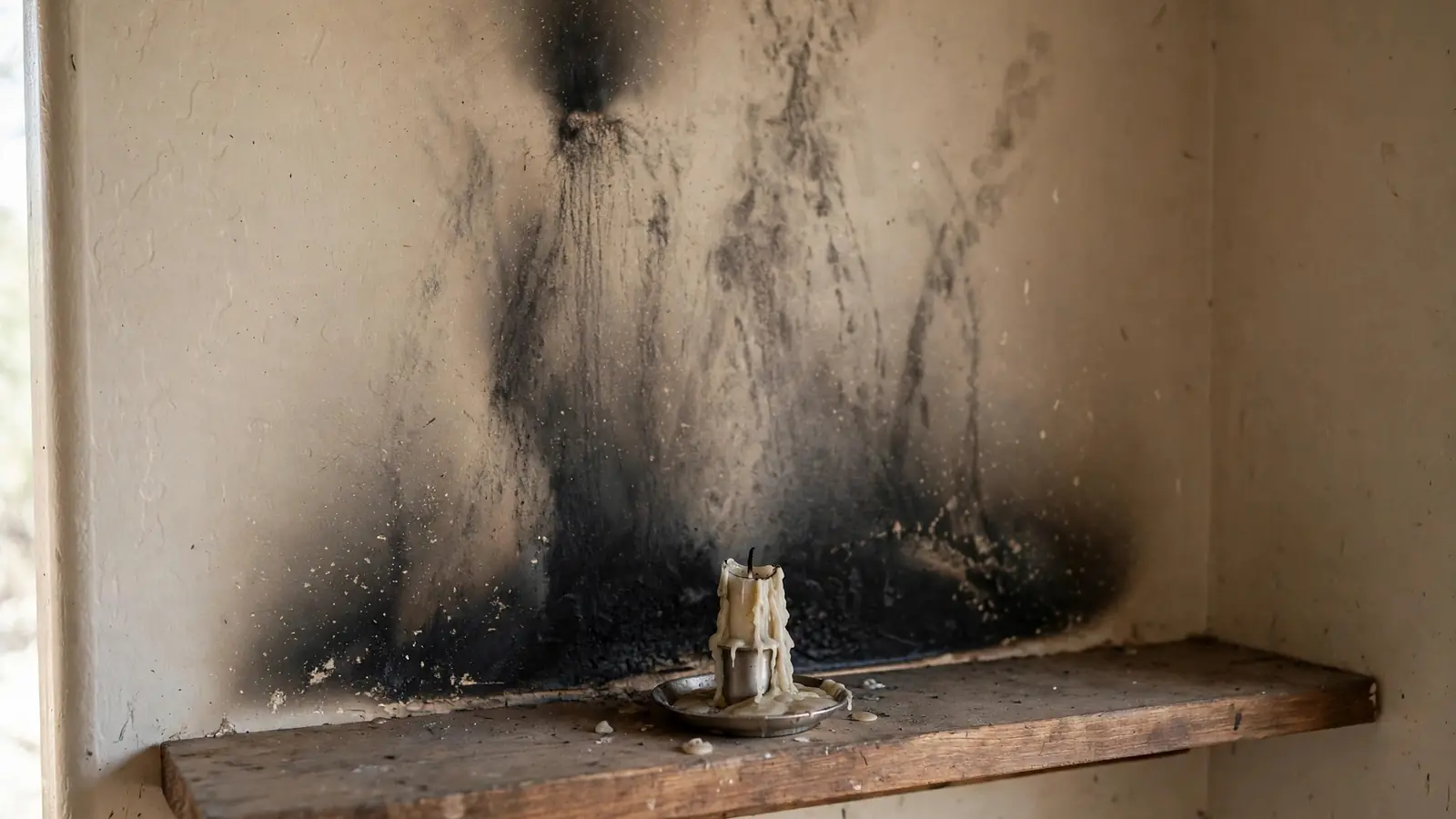
A candle that ignites a curtain or a decoration may burn for only a minute or two, but synthetic fabrics, plastics and artificial greenery produce dense, sooty smoke. That smoke spreads through the room and beyond, leaving a grey film on walls and ceilings and black soot webs in corners. Burning candle wax itself can leave oily soot.
Holiday cooking fires add burned-food residue, which is thin and sticky with a strong smell. Because these fires are small, people often assume a quick wipe will do. Usually it does not, and wet-wiping soot spreads it.
First steps
Right after a small fire
- 1
Make sure it is out
Check that nothing is still smouldering, including inside furniture or decorations.
- 2
Ventilate if outside air is clean
Open windows briefly, especially in cool weather.
- 3
Turn off the cooling or heat fan
Stop the system spreading residue.
- 4
Photograph the damage
Before cleaning, for your records.
- 5
Do not wipe soot with water
Use dry methods first.
DIY
Cleaning a small area yourself
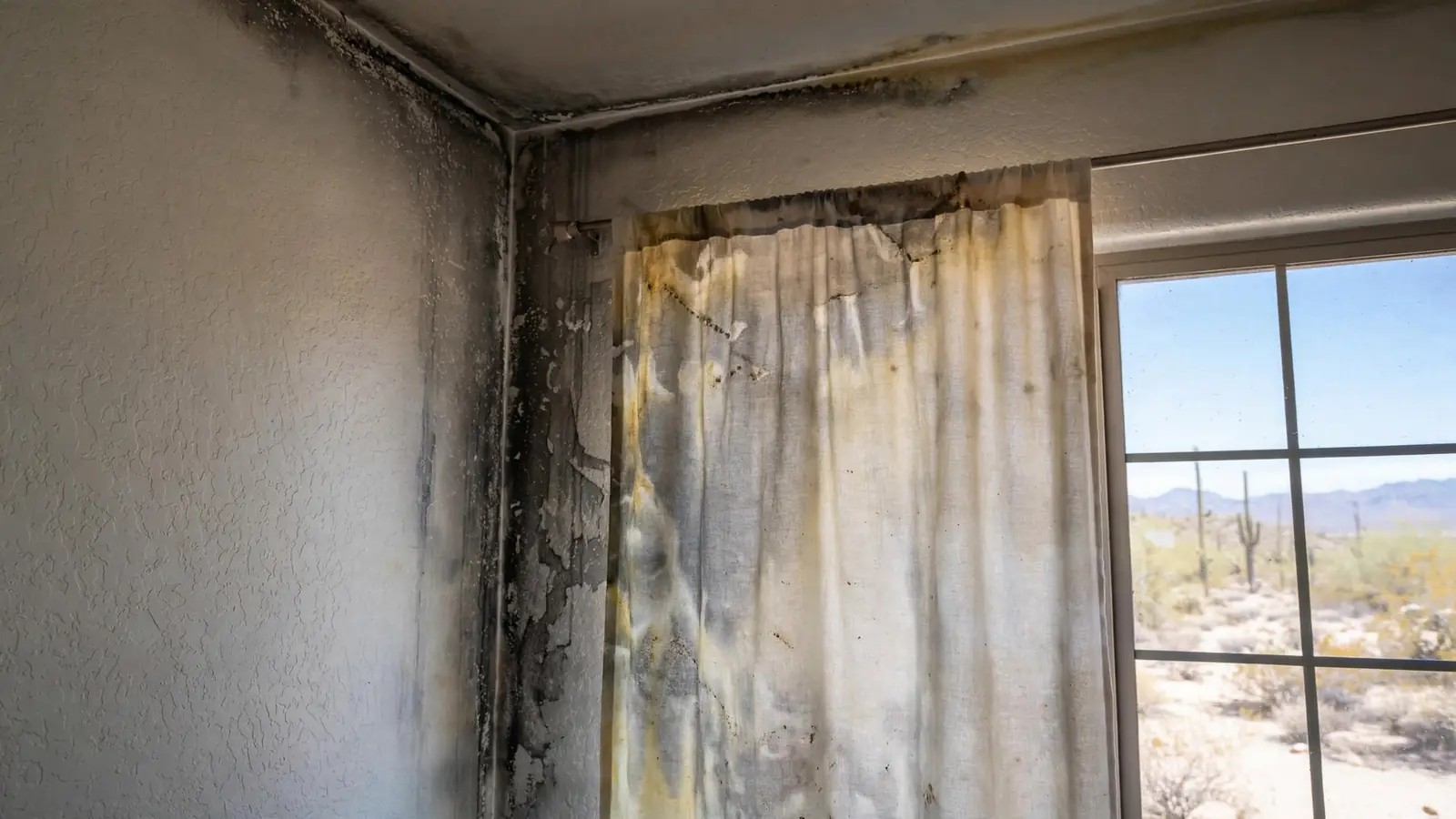
For a small area of light, dry soot, wear gloves and a fitted N95 respirator. Vacuum loose soot with a HEPA-filtered vacuum, using a brush attachment held just off the surface. Then use a dry chemical sponge in straight, overlapping strokes, changing to a clean face often. Only after the dry pass, wash remaining residue with a mild degreasing cleaner and rinse. If a shadow remains, a stain-blocking primer and fresh paint will be needed.
Wash or professionally clean affected curtains, cushion covers and throws. Throw away food exposed to smoke and replace burned decorations.
Decision
DIY or professional
| Situation | Suggested approach |
|---|---|
| Small soot mark above a candle | DIY dry cleaning |
| Soot film on one wall | Careful DIY or professional |
| Soot webs across the ceiling | Professional cleaning |
| Smoke smell in several rooms | Professional smoke and odor work |
| Burned furniture or curtains | Professional assessment |
| Fire department used water or an extinguisher | Professional cleanup |
Kitchen
Holiday cooking fires
Large holiday meals mean more time at the stove and more distractions. A pan of oil left unattended or food burned in the oven can fill the house with smoke. After a cooking fire, clean the range hood, replace its filters, degrease cabinets and walls, and check that the stove and its gas or electrical supply are safe before using it again.
Seasonal homes
Mesa winter visitors and holiday homes
Many Mesa households host family over the holidays, and many winter residents arrive in late autumn. Homes closed up for months may have dry decorations stored near water heaters or furnaces. Check stored decorations, keep them away from heat sources and test smoke alarms when you arrive for the season.
Soot webs
Soot webs and why they form
After even a small fire, homeowners often find black strands hanging from ceiling corners that look like cobwebs. These are soot webs: chains of soot particles that formed along air currents and settled on existing cobwebs or rough corners. They are fragile and smear easily, so they should be vacuumed carefully with a HEPA vacuum rather than wiped. Their presence means smoke moved through that part of the room and other surfaces nearby probably need cleaning too.
Contents
Furniture, fabrics and decorations
Upholstered furniture near a small fire absorbs smoke into its fabric and padding. Light exposure often responds to professional upholstery cleaning. Curtains, tablecloths and throws can usually be cleaned. Artificial trees and decorations that melted or charred should be thrown away. Ornaments, dishes and glassware usually wash well.
Electronics near the fire, such as TVs and speakers, should stay unplugged until checked, since soot can be conductive.
Step by step
A safe cleanup order for a small fire
- 1
Ventilate and protect yourself
Open windows if outside air is clean; wear gloves and a fitted N95.
- 2
Remove burned items
Bag charred decorations and debris.
- 3
Vacuum loose soot
HEPA vacuum ceilings, walls and soot webs first.
- 4
Dry sponge
Work top to bottom on walls and ceilings.
- 5
Wash remaining residue
Mild degreasing cleaner, then rinse.
- 6
Launder fabrics
Or send them to a smoke-capable cleaner.
- 7
Prime and paint
Where shadows remain after cleaning.
Bigger small fires
When the fire department came
If the fire department responded, even to a small fire, expect more cleanup than a quick wipe. Firefighters may have used water or an extinguisher, opened windows or ventilated the house. Extinguisher powder is fine, mildly corrosive and spreads widely, so surfaces and electronics nearby need careful cleaning. Water from a hose line needs drying. In these cases a professional assessment is usually worthwhile, and photographs taken before cleanup help with any claim.
FAQ
Candle and holiday fire questions
Why are there black cobwebs on my ceiling after a small fire?
Those are soot webs: strands of soot that formed along air currents. They need dry removal, not wiping.
Can I clean smoke off my walls with soap and water?
Not as a first step. Dry methods come first, or the soot smears.
Do smoky curtains need replacing?
Often they can be professionally cleaned; badly burned fabric is replaced.
When should I call a professional?
When soot is on ceilings or several rooms, when the smell lingers, or when water or an extinguisher was used.
Can scented candles cause soot on walls?
Yes. Large or flickering flames leave soot over time; trim wicks and keep candles away from drafts.
Is a small fire worth an insurance claim?
It depends on your policy and the damage. Photograph everything and talk with your insurer before deciding.
Should I replace smoke alarms after a small fire?
Test all alarms and replace any exposed to heavy smoke.
Can I use the fireplace after a holiday fire nearby?
Have the chimney checked if the fire was near the fireplace or if soot entered the flue.
How do I get smoke smell out of a Christmas tree skirt or stockings?
Washable items usually respond to laundering; delicate items may need professional cleaning.
Are flameless candles safe?
They remove the open flame, but keep batteries and chargers in good condition.
Can soot stain my ceiling permanently?
If wiped wet or left too long, yes. Dry methods first, then a stain-blocking primer if a shadow remains.
Do I need to clean inside closets?
Only if smoke reached them; smell inside first.