
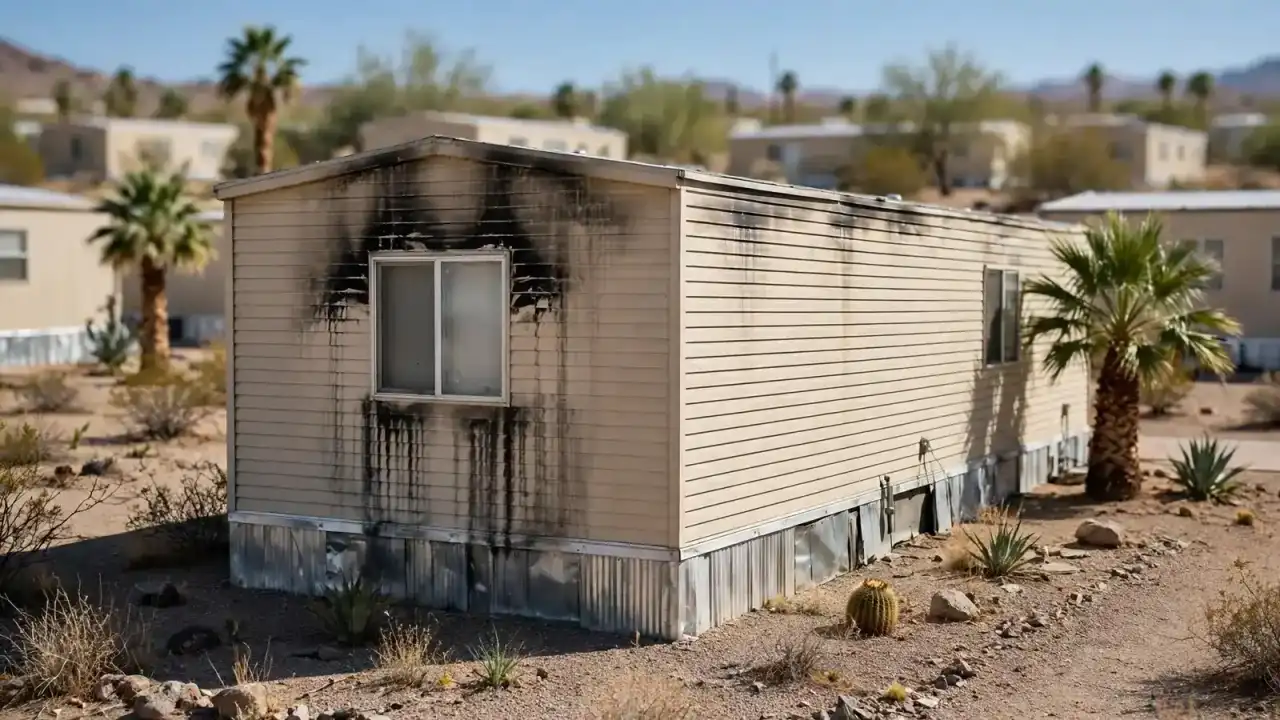
Key facts: Manufactured home fires
- Manufactured homes are built to the federal HUD code, which sets construction and fire safety standards for factory-built housing.
- Smoke spreads quickly through the compact layout and into ductwork that usually runs under the floor.
- Water from firefighting can collect in the belly beneath the floor, out of sight.
- Damaged or heat-exposed manufactured homes may need a structural assessment before repairs.
Construction
How manufactured homes are built
A manufactured home is built in a factory on a permanent steel chassis and transported to its site in one or more sections. Homes built since 1976 follow a federal construction standard often called the HUD code, which covers structure, fire safety, plumbing, electrical and energy efficiency. Older homes built before that standard, often called mobile homes, may have fewer fire safety features.
Walls are typically lighter than in a site-built home, with gypsum panels often covered in vinyl or paper, or decorative paneling. Floors are usually particleboard or oriented strand board on floor joists attached to the chassis. Underneath, a belly wrap of plastic or woven fabric encloses insulation, water lines and the heating and cooling ducts. Roofs may be metal, shingle or a coated membrane.
These features mean that a fire in a manufactured home behaves differently: smoke reaches every room quickly, heat can affect lighter materials more, and firefighting water can collect beneath the floor where nobody can see it.
Checklist
First steps after a fire in a manufactured home
- 1
Wait for the all-clear
Do not go back in until the fire department says it is safe.
- 2
Tell the park office
In a land-lease community, management needs to know promptly.
- 3
Call your insurer
Manufactured homes are usually insured under a specific policy type; start the claim.
- 4
Photograph everything
Inside, outside and underneath if the skirting is open.
- 5
Secure the home
Board windows and doors and tarp roof openings.
- 6
Ask about utilities
Electrical, gas and water connections need checking before use.
Smoke
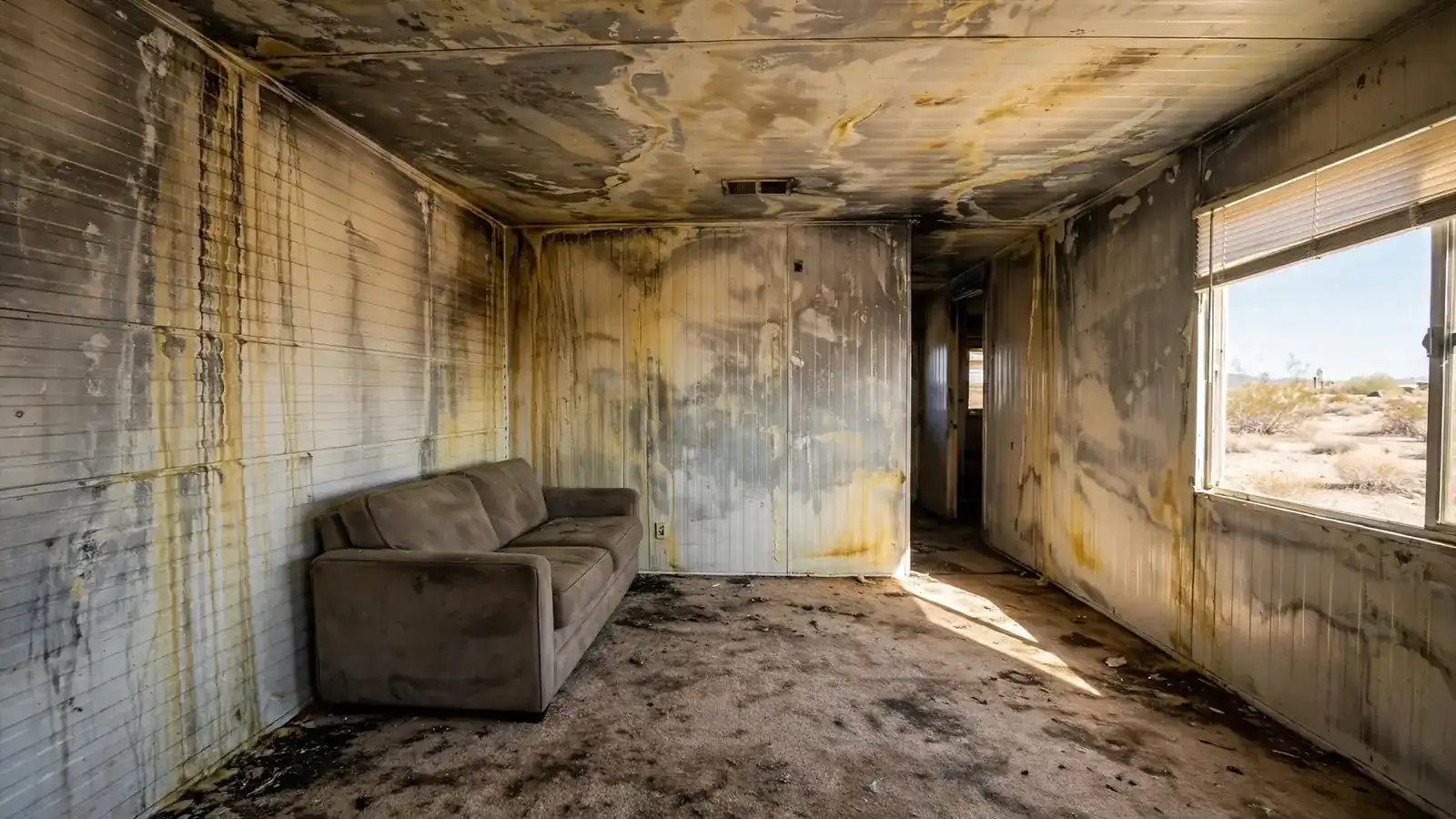
Smoke and soot in a compact home
Rooms in a manufactured home are close together, so smoke from a kitchen or bedroom fire fills the whole home quickly. Ductwork in the belly can carry soot to every register if the system was running. Vinyl-covered wall panels and ceiling panels take staining differently from painted drywall; some clean with mild products, others discolour or bubble from heat and need replacement.
Cleaning uses gentle, panel-appropriate methods, and belly ductwork is cleaned or replaced. Odor treatment usually covers the whole home.
Water
Water under the floor
Water from firefighting soaks through floor decking and collects on the belly wrap below. It soaks insulation there, can rot the decking from beneath and creates a warm, dark space where mold can grow. Drying often means opening the belly in the wet area, removing wet insulation, drying the cavity and replacing insulation and wrap. Soft or swollen floor decking is cut out and replaced.
Repair or replace
Typical outcomes in manufactured homes
| Area | Often |
|---|---|
| Vinyl wall panels, light smoke | Cleaned |
| Wall panels, heat-blistered | Replaced |
| Ceiling panels with heavy soot | Replaced |
| Floor decking soaked | Replaced in the wet area |
| Belly insulation wet | Removed and replaced |
| Belly ductwork with soot | Cleaned or replaced |
Decisions
Repair, replace or move
After a serious fire, owners sometimes face a choice between repairing the home and replacing it. Structural damage to the chassis, extensive heat damage to walls and roof, and the age of the home all factor in. Your insurer and a qualified contractor can help assess this. In a land-lease community, park rules about home age and appearance may affect what is allowed.
Repairs to manufactured homes should be done by contractors familiar with their construction. In Arizona, the Department of Housing oversees manufactured housing installation and licensing; ask contractors about their experience with manufactured homes.
Insurance
Insurance for manufactured homes
Manufactured homes are usually insured under policies written for them, which can differ from standard homeowner policies in how they value the home, cover contents and handle additional living expenses. Read your policy, ask your insurer how the home is valued and whether it covers removal of debris and temporary housing. In a land-lease community, the park owner insures common areas but not your home.
Pre-1976 homes
Older mobile homes
Homes built before the federal standard took effect in 1976 often lack features found in newer manufactured homes, such as certain fire-resistant materials and egress window standards. They may also have older wiring. After a fire, these homes may be harder to repair to current expectations, and replacement may be discussed. Ask a contractor experienced with older homes for an honest assessment.
Land-lease communities
Working with park management
In a land-lease community, the park owns the land and you own the home. After a fire, the park will want to know about safety, debris removal and the timeline for repairs. Some parks have rules about how long damaged homes can remain, what repairs must look like and whether older homes can be replaced on the same lot. Ask management for the rules in writing and share them with your insurer and contractor so plans fit them from the start.
FAQ
Manufactured home fire questions
Is a manufactured home harder to restore after a fire?
It is different rather than harder. Materials, ductwork and floors need methods suited to them.
Who do I tell in a mobile home park?
Park management, your insurer and, for repairs, a contractor experienced with manufactured homes.
Can water under the floor cause mold?
Yes. The belly is usually opened to remove wet insulation and dry the space.
Will my manufactured home need to be replaced?
Not usually after a small fire. Serious fires may lead to a repair-or-replace decision with your insurer.
Does my park's insurance cover my home?
Usually not. The park insures common areas; your home needs its own policy.
Can an older mobile home be repaired after a fire?
Often, if damage is limited. Extensive damage to an older home may lead to a replacement discussion.
Do manufactured homes have smoke alarms?
Homes built to the HUD code include smoke alarms. Test them monthly and replace old ones.
Can I live in a manufactured home with smoke damage?
Only once the fire department clears it, utilities are safe and smoke has been cleaned. Sensitive people should stay elsewhere during cleanup.
Who repairs the skirting after a fire?
Skirting is usually part of the home's repairs; check park rules about materials.