
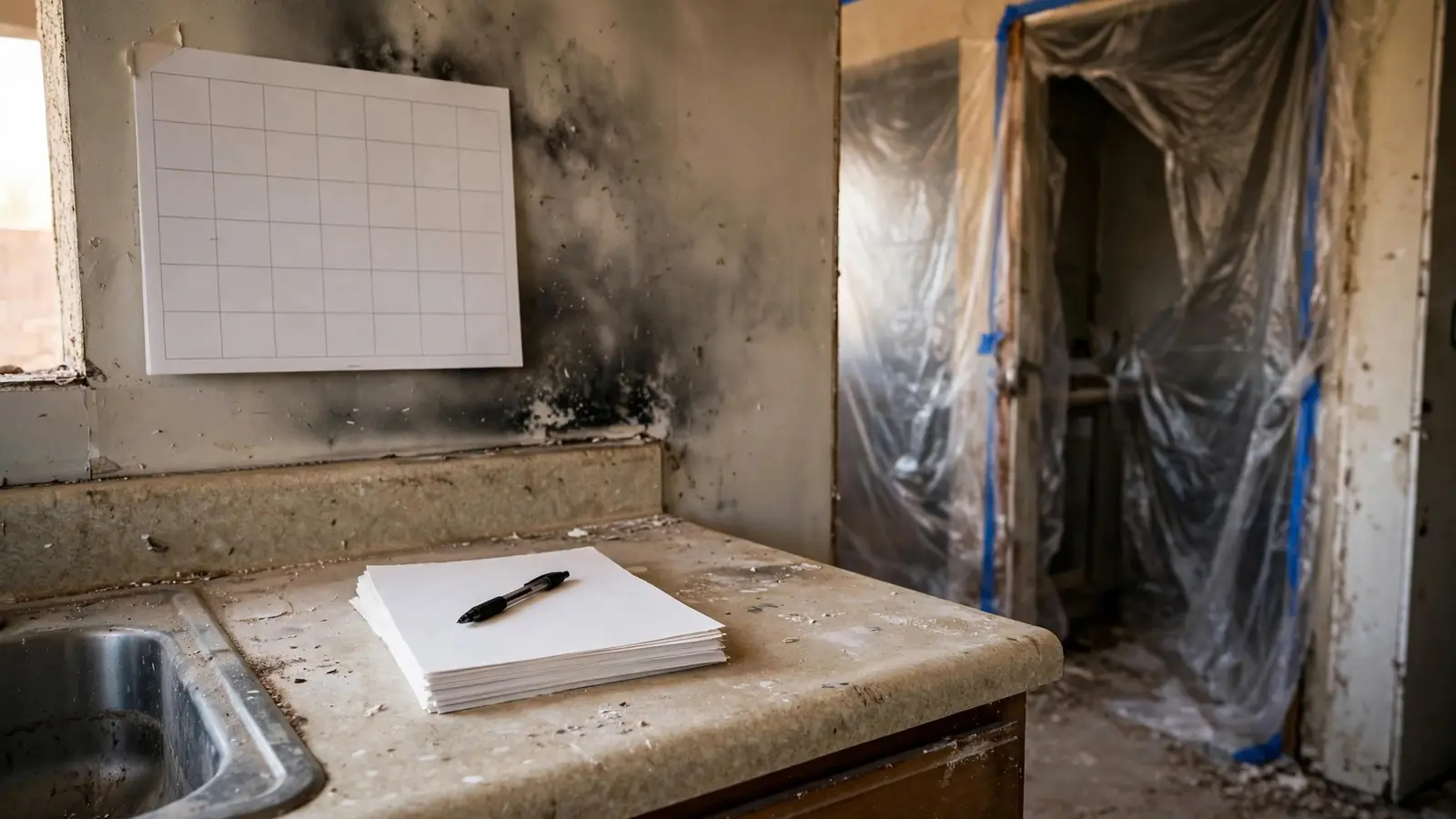
Key facts: Fire restoration timeline
- Restoration follows a sequence: secure, dry, clean, deodorize, then repair.
- Drying typically takes several days, depending on materials and weather.
- Smoke-only jobs usually take weeks; jobs needing structural repair take longer.
- Insurance approvals and permits often affect timing as much as the work itself.
Background
Why timelines vary so much
A small kitchen fire with light smoke and a large garage fire that burned into the attic are both house fires, but their timelines are very different. The extent of damage, the amount of water used, the materials in the home, insurance approvals, permit requirements and the availability of materials all play a part. Still, the order of work is consistent, and understanding it helps set expectations.
Stages
The typical sequence
- 1
First 24 hours
Fire department release, insurer contacted, photos, board-up and tarping.
- 2
Days 1 to 5
Water extraction, removal of wet materials, drying with daily readings.
- 3
First two weeks
Adjuster inspection, contents pack-out, soot and smoke cleaning begins.
- 4
Following weeks
Cleaning completed, odor treatment, duct cleaning, sealing.
- 5
Repairs
Permits, drywall, paint, flooring, cabinets, roofing as needed.
- 6
Final walk-through
Check on a hot day for odor; contents returned.

Timing
Rough timeframes by damage level
| Damage level | Typical range |
|---|---|
| Light smoke, small area | A few days to two weeks |
| Moderate smoke, several rooms | Two to six weeks |
| Smoke plus water damage | Several weeks |
| Structural fire damage | Several months |
| Total loss or rebuild | Many months |
Delays
What slows things down
Insurance approvals can take time, especially for larger claims or where scopes differ. City of Mesa permits are needed for regulated repair work. Testing older materials for asbestos or lead adds steps. Matching materials, such as roof tiles or cabinets, can take weeks. Monsoon storms can damage temporary protection and add new water damage. Summer heat can limit outdoor and roof work to early hours.
Clear communication helps: ask the contractor for a written plan with stages, and ask your adjuster what they need from you to move each stage forward.
Temporary housing
Living elsewhere in the meantime
Many homeowner policies include additional living expenses while the home cannot be lived in. Keep receipts for hotels, meals and other spending caused by living away. For longer repairs, short-term rentals near schools and work can reduce disruption.
Day one in detail
The first night and the first day
The first hours after a fire are about safety and shelter. Once the fire department has finished and given its all-clear, you may be allowed in briefly to collect medicines, documents, glasses and a change of clothes. If the house cannot be lived in, family, friends, a hotel or the American Red Cross can provide somewhere to stay that night.
The next morning, call your insurer to open a claim and ask what they need. Photograph every room and the outside before anything moves. Arrange board-up and roof tarping, especially in monsoon season, and keep receipts for anything you buy.
Weeks one to three
The drying and cleaning stretch
If firefighting water was used, drying runs for several days with daily moisture readings. During this time the adjuster usually inspects, contents are sorted and packed out, and the contractor prepares a detailed scope. Once materials are dry, soot and smoke cleaning moves through the house room by room, followed by duct cleaning and odor treatment.
This is often the stretch when homeowners feel least in control, because so much depends on drying progress and approvals. Ask for short, regular updates and a written plan for the next stage.
The final stage
Repairs and moving back
Repairs begin once cleaning and odor work are done and the scope is agreed. Small jobs may need only sealing and paint. Larger ones involve drywall, insulation, flooring, cabinets, electrical work and roofing, many of which need City of Mesa permits and inspections. Contents return after the house is clean, and a final walk-through, ideally on a warm afternoon with the house closed, confirms that odor is gone.
Belongings
Contents: packed out and returned
Contents are often packed out early, in the first week or two, so the house can be cleaned and repaired without them in the way. They are cleaned at the contractor's facility or by specialists while the house is restored. Items that cannot be saved are listed for the claim. Contents usually come back after cleaning, painting and flooring are finished, so they are not re-soiled. Ask for the inventory list and check items off as they return.
Progress
Signs a job is on track
A job on track has clear stages, daily moisture logs during drying, regular updates, written changes to the scope and permits applied for before repairs begin. If updates stop or the plan keeps changing without explanation, ask the contractor for a written status summary.
After repairs
Why the house may stay empty longer than the repairs
Even after repairs are complete, a few final steps can delay moving back: final city inspections where permits were required, delivery and installation of replacement appliances or furniture, return and unpacking of cleaned contents, and a final odor check. Plan for a short buffer between the end of repairs and moving back so these steps are not rushed.
FAQ
Timeline questions
How long until I can move back in?
It depends on the damage. Light smoke jobs may take days or a couple of weeks; structural repairs take months.
Why does drying take several days?
Water inside walls, floors and cabinets dries slowly and must be measured until it reaches normal levels.
Can cleaning start before the adjuster visits?
Emergency steps such as board-up and drying should not wait. Larger work usually follows the adjuster's inspection.
Do permits slow repairs?
They can. Your contractor should apply early and keep you informed.
Can I speed up my restoration?
Respond quickly to requests, keep records organised and approve scopes promptly. Some steps, such as drying, cannot be rushed.
What happens if a monsoon storm hits during repairs?
Check temporary protection, photograph any new damage and report it to your insurer and contractor promptly.
Who decides when the house is ready?
You, with the contractor's and, where needed, the city inspector's sign-off. Check the house on a warm afternoon with it closed up.
Can repairs happen while contents are stored?
Yes. That is usually the reason for packing out early.
Does the time of year affect the timeline?
In Mesa, monsoon storms and summer heat can slow roof and outdoor work, and winter is busy with seasonal residents.
Will the adjuster visit more than once?
Sometimes, especially for larger claims or when hidden damage is found during cleaning.