
Key facts: Soot Removal
- Soot is fine carbon residue from incomplete combustion, mixed with oily and acidic by-products.
- Painted concrete block is porous; soot settles into the texture of the block and the mortar joints.
- Dry cleaning methods are normally used before wet cleaning so residue is not smeared deeper.
- Fine combustion particles can irritate the lungs and worsen heart and lung conditions [1].
- The IICRC S700 document describes recommended practice for fire and smoke cleanup [2].
What soot is
Why soot is never just one thing
When a fire does not get enough oxygen to burn its fuel completely, part of that fuel leaves as microscopic carbon particles bound up with tars, oils and acids. These ride the hot smoke through the house and drop out wherever the smoke cools or slows: ceilings, the upper part of walls, the tops of door frames and anything rough enough to grip them.
The chemistry changes with the fuel. A quick, hot fire in paper or wood leaves a dry grey powder that lifts off fairly easily. A smouldering fire in a recliner, mattress or garage full of plastic leaves a dark, greasy film. Food burned on a stovetop leaves a thin yellowish film with a strong, sour smell. In a real house fire, several of these usually mix, and the blend varies from room to room.
That variety is why soot removal begins with testing rather than scrubbing. The technician has to know what is on each surface before choosing how to take it off, because the wrong method can turn a cleanable stain into a permanent one.
Soot also does not stay inert. Many residues are mildly acidic and, over days, can discolour plastics, tarnish chrome and brass, cloud glass and stain grout. Starting cleanup within the first days limits that slow damage.
Where it settles
Mesa surfaces that hold onto soot
Painted concrete block
Common in older Mesa homes, block walls have a pitted surface and mortar lines that trap soot even under paint.
Knock-down and orange-peel texture
Sprayed wall and ceiling textures create ridges and hollows where particles lodge.
Stucco exteriors
Smoke escaping through windows and eaves leaves streaks on porous stucco.
Saltillo and ceramic tile with wide grout
Grout absorbs soot; glazed tile wipes clean but the joints darken.
Wood beams and ceiling planks
Some Mesa homes have exposed beams that absorb soot and odor.
Ceiling fans and vent covers
Fan blades and grilles collect a heavy layer on top surfaces.
Spread
How soot reaches rooms the fire never touched
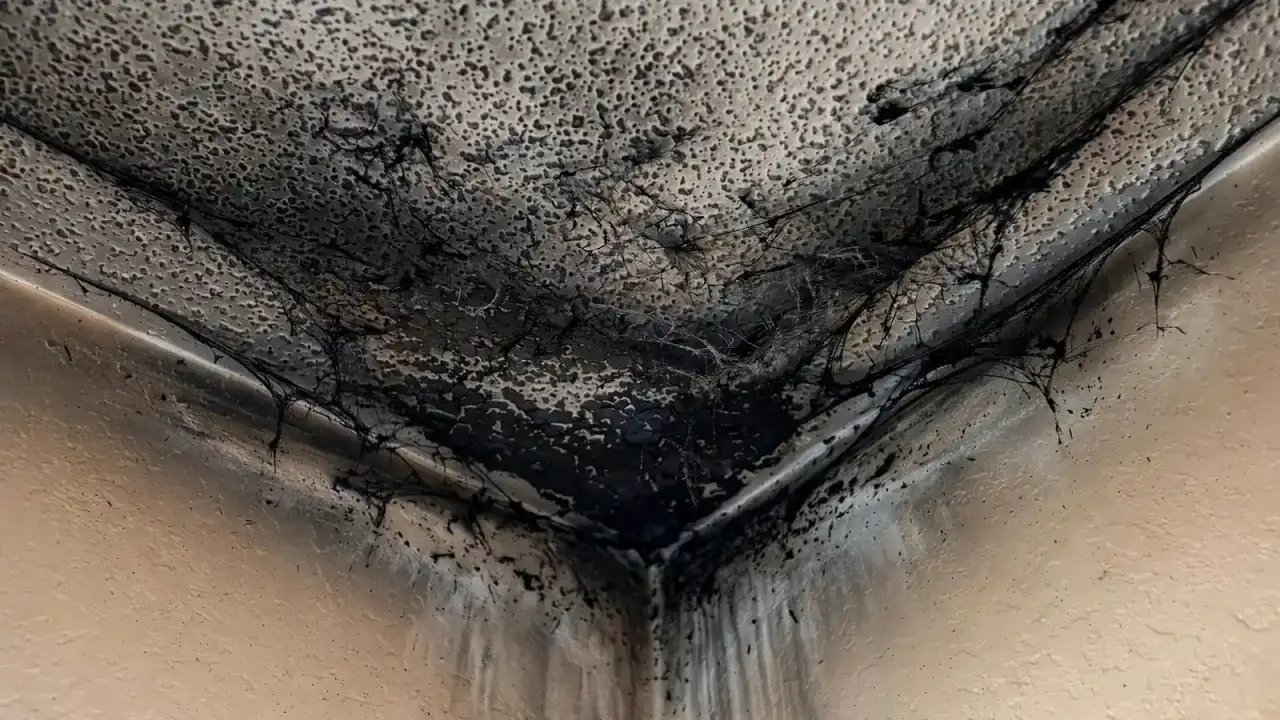
Fire pushes smoke outward under pressure. It forces its way under doors, through gaps around ceiling lights and the attic access, along the tops of interior walls, and into the duct system if the cooling was running. Many Mesa homes are single-storey with a single attic over the whole floor plan, so smoke that reaches the attic can drop back into bedrooms at the far end of the house.
Cooler surfaces pull particles out of the air. In Mesa, that often means walls shaded from the sun, ceilings below air-conditioned supply ducts, and interior closet walls. Dark lines along ceiling framing and dark outlines around pictures are signs of this effect.
Older homes that still use evaporative coolers move a lot of air through the house, and if the cooler was running during a fire it may have carried soot into every room. Homes with refrigerated air can do the same through the ductwork.
The practical lesson is that every room, closet, cabinet, the attic and the cooling system need to be checked. Soot left anywhere keeps releasing particles and smell.
Diagnosis
Testing before cleaning starts
These checks take minutes and prevent the hardest mistake to undo: smearing soot into a surface.
- 1
Dry sponge test
A dry chemical sponge drawn across a hidden spot shows whether soot lifts cleanly or smears.
- 2
Identify the surface
Painted block, textured drywall, stucco, wood, tile and fabric each need different treatment.
- 3
Spot wet test
A mild cleaner is tried in an inconspicuous area to check for bleeding, swelling or texture damage.
- 4
Odor and acidity
Strong smell or etching on metal points to residue that needs faster action or sealing.
- 5
Older material check
Textures and some floor tiles in homes built before the 1980s may need asbestos testing first. [3]
Diagnosis
What the residue suggests
| What you see | Likely source | Usual first step |
|---|---|---|
| Grey powder that wipes onto a finger | Hot fire in paper or wood | HEPA vacuum, then dry sponge |
| Black film that smears | Plastics, foam or garage contents | Dry removal first, then degreaser |
| Sticky yellow film in the kitchen | Burned food | Protein-specific cleaner |
| Black in block texture and mortar | Smoke along a block wall | Dry methods, then masonry-safe cleaning |
| Dark lines along ceiling framing | Cool framing drew particles | Clean, then stain-blocking primer |
| Grey haze in far bedrooms | Smoke through the attic or ducts | Room cleaning plus duct inspection |
The process
How a Mesa soot job is usually carried out
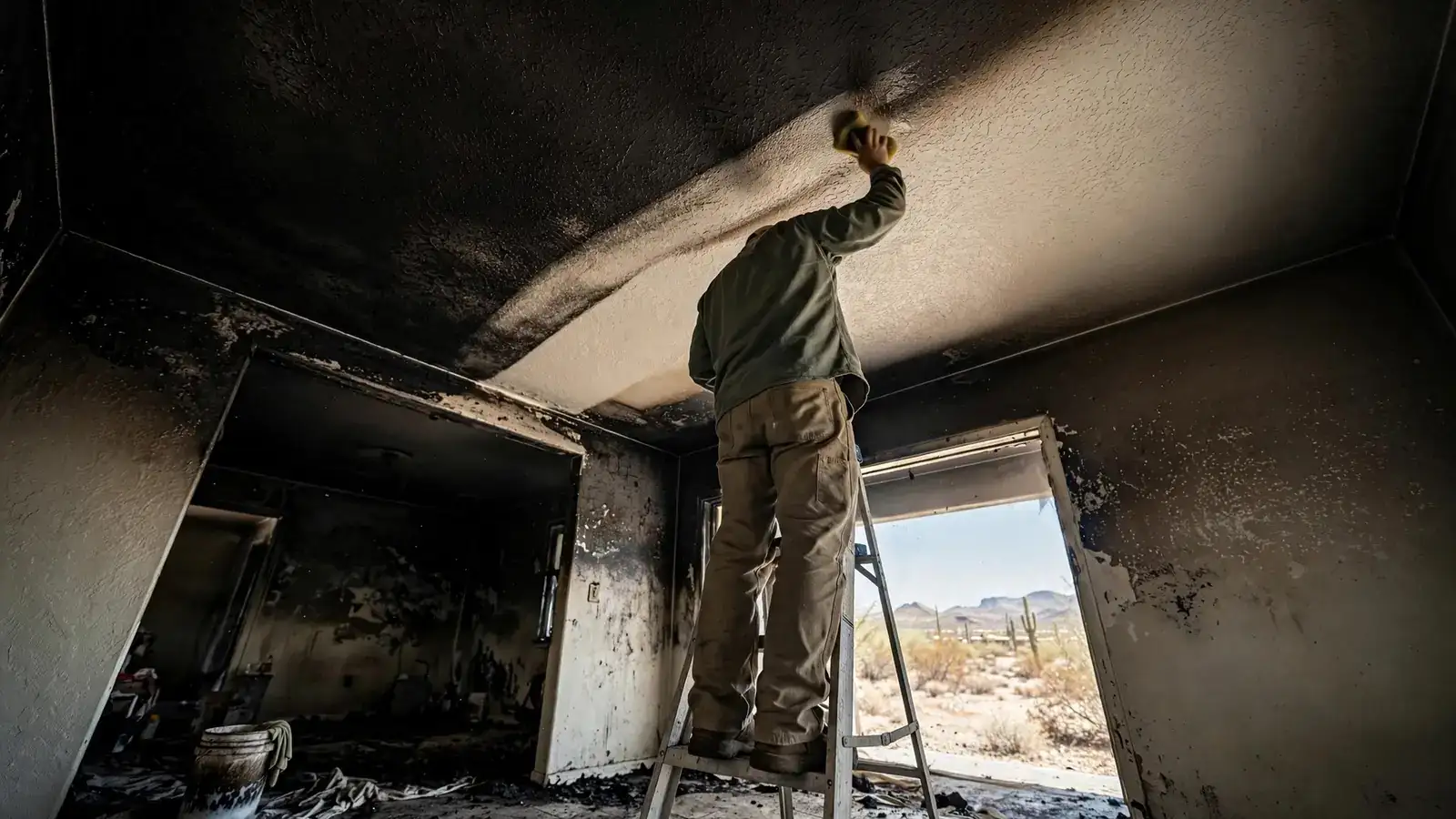
The work moves from the top down and from dry to wet. Ceilings come first, so anything that falls lands on surfaces still to be cleaned. HEPA-filtered vacuums lift loose particles without blowing them back into the room. Dry chemical sponges, made of vulcanised rubber, follow on smooth paint and light texture, pulling residue into the sponge rather than smearing it.
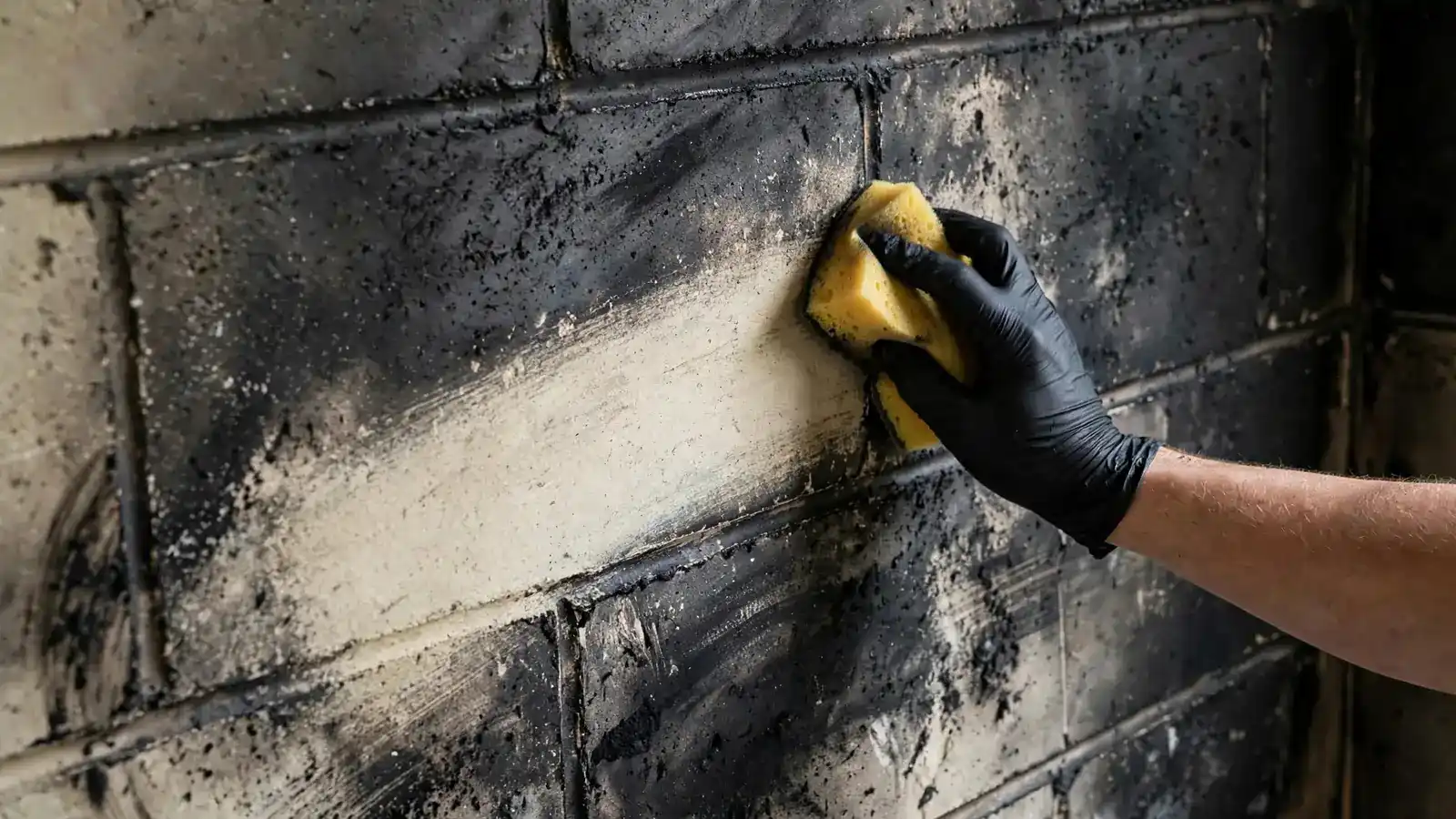
Wet cleaning comes next, with products matched to the residue: alkaline cleaners for most smoke film, degreasers for oily soot, protein cleaners for kitchen fires. Painted block is cleaned with soft brushes and masonry-safe products, working the residue out of the texture and mortar lines, then rinsed carefully. Textured drywall is cleaned gently to avoid flattening the texture.
Contents are dealt with separately. Hard items are hand cleaned or cleaned in ultrasonic tanks; soft goods go to cleaners equipped for smoke; electronics are left unpowered until inspected. Everything sent away or discarded is listed and photographed.
Where a shadow or smell remains after cleaning, surfaces are sealed with a stain- and odor-blocking primer before repainting. This is common on ceilings, block walls and any unpainted wood in the attic.
Methods
HEPA vacuums, sponges, blasting: matching method to surface
| Method | Works well on | Avoid on |
|---|---|---|
| HEPA vacuuming | Every surface, as the first pass | Nothing; always step one |
| Dry chemical sponge | Flat paint, light texture | Greasy residue, heavy texture |
| Alkaline detergent | Gloss paint, tile, laminate | Unsealed wood, natural stone |
| Degreaser | Oily soot on hard surfaces | Certain plastics and delicate finishes |
| Masonry-safe cleaner and soft brush | Painted and bare block, brick | Drywall |
| Blasting (soda or dry ice) | Charred framing, attic wood | Finished living spaces |
| Ultrasonic cleaning | Small hard contents | Electronics, porous items |
Before help arrives
What you can safely do while you wait
Limit the spread. Switch the thermostat fan off and turn off any evaporative cooler. Close doors to the worst rooms and keep children and pets out. Lay old sheets on floors along the paths you need to use.
Leave the cleaning alone. Wet-wiping soot, running a household vacuum without a HEPA filter, or turning on a ceiling fan almost always makes the job bigger. Take photographs of every room before anything moves.
- Cooling system and fan off
- Doors closed on sooty rooms
- No damp rags on soot
- No ceiling fans
- Photos before moving anything
The visit
What happens when the crew arrives
Expect questions and a walk-through first. The contractor will want to know what burned, roughly how long it burned, whether water was used and whether the cooling system was running. They will look at every room, open closets and cabinets, check the attic access and look at the supply and return grilles.
Containment follows: plastic sheeting across doorways, protective coverings on floors along work paths, and HEPA air scrubbers running while cleaning disturbs residue. Salvageable contents are cleaned in place or packed out with an inventory you should receive.
Because the contractor is independent, ask on your call how they record their work. Room-by-room photographs, a contents list and notes on what was cleaned, sealed or removed make an insurance claim much smoother.
Mesa specifics
Mesa homes and what they mean for soot
Mesa has a wide range of housing: early twentieth-century homes downtown, 1950s and 1960s block houses, 1970s and 1980s planned communities, retirement communities, manufactured home parks and new master-planned neighborhoods on the east side. Painted concrete block, both slump block and standard block, is especially common in older Mesa homes, inside and out.
Block is fire-resistant and often survives structurally, but its textured, porous face takes soot deeply. Cleaning block well takes more time and different products than cleaning smooth drywall. Many newer Mesa homes are frame and stucco with knock-down drywall texture, which brings its own challenge of keeping texture intact during cleaning.
Summer heat is the other local factor. A house left without cooling after a fire becomes very hot, and heat softens residue and drives it further into surfaces while releasing more odor. Prompt cleaning, and restoring safe cooling where possible, helps.
Prevention
Keeping future soot problems small
- Service gas appliancesFurnaces and water heaters that burn poorly can puff soot and produce carbon monoxide.
- Watch candlesUntrimmed wicks and drafts leave soot on walls over time.
- Change cooling filters on scheduleFresh filters catch more particles daily and during small incidents.
- Keep garages organisedPlastics, paint and fuel near heat sources make heavy, oily soot if they burn.
- Know where the thermostat fan switch isTurning it off during a fire limits spread.
Deciding
Clean or replace: what can be saved
Non-porous surfaces such as glass, glazed tile, metal and sealed counters almost always clean. Painted drywall usually cleans and then gets primer and paint. Painted block cleans with the right methods and often benefits from sealing. Textured ceilings, unsealed wood, grout and fabrics are less predictable.
Anything warped, blistered, melted or charred is usually removed regardless of how it cleans, because heat has changed the material. Insulation that took smoke is generally replaced. A contractor should explain each decision and photograph materials before removal.
Contents
Soot on belongings
Dishes, picture frames, lamps, decor and tools all carry residue, as do the insides of drawers and cabinets that were not tightly closed. Hard items are hand cleaned or cleaned ultrasonically. Clothing, linens and curtains go to cleaners equipped for smoke. Books, papers and photos need gentle dry methods and, if wet, may be frozen until they can be dried. Electronics stay unplugged until inspected, because soot can conduct electricity and corrode circuits.
Garages
Garage fires and soot in Mesa homes
Garage fires are common and produce some of the heaviest, oiliest soot, because garages hold vehicles, fuel, paint, chemicals and plastic storage. In many Mesa homes the garage shares a wall and an attic with the living space, and the door from the garage into the laundry or kitchen is the main route for soot into the house. Cleanup usually covers the garage structure, the shared attic and the rooms nearest the garage.
Related
Problems that usually come with soot
Lingering smoke odor
Odor stays in porous materials after visible soot is gone.
Read moreWater from firefighting
Soot that gets wet is tougher to lift, which is why drying goes first.
Read moreSmoke across the whole house
Even distant rooms usually carry a thin grey film.
Read moreOpenings in the house
Broken windows and roof vents need covering.
Read more
Manufactured homes
Soot in manufactured homes
Mesa has many manufactured home communities, especially in east and central parts of the city. Manufactured homes are built differently from site-built houses: lighter wall and ceiling panels, vinyl-covered gypsum or paneling on walls, ducts running under the floor, and compact rooms. Soot reaches every room quickly in a smaller home, and vinyl wall coverings and ceiling panels can stain or bubble from heat.
Cleaning methods have to suit these materials. Vinyl-covered wall panels clean with mild products but can be damaged by solvents. Ceiling panels with a textured finish can be hard to clean evenly and are sometimes replaced. Belly ductwork under the floor may carry soot from the furnace or air handler to every register. Our guide on fire damage in manufactured homes covers these differences in more detail.
Seasonal homes
Winter visitors and homes found late
Many Mesa homes belong to winter residents who spend the hottest months elsewhere. A small fire in an empty home, such as an electrical fault or an appliance failure, may smoulder or burn out without anyone noticing for days or weeks. By the time it is found, soot has had time to set, odor has soaked into materials and summer heat has baked residue onto surfaces.
Late-discovered fires often need more aggressive cleaning and more replacement of porous materials than fires dealt with the same day. If you manage a seasonal home, a neighbor or property manager checking it regularly, and working smoke alarms that can alert someone remotely, make a real difference.
Timing
A typical sequence for a Mesa soot job
| Stage | What happens |
|---|---|
| First visit | Walk-through, testing, containment and contents sorting |
| If water was used | Extraction and drying before cleaning finishes |
| Dry cleaning | HEPA vacuuming and dry sponging, ceilings first |
| Wet cleaning | Residue-matched cleaners; masonry methods on block |
| Finishing | Stain-blocking primer and paint where shadows remain |
Outside the house
Stucco and exterior soot
When smoke escapes through broken windows, open doors or the eaves, it leaves dark streaks on the stucco above. Stucco is porous and rough, so soot settles into its texture. Light streaks can often be cleaned with suitable detergents and gentle, low-pressure rinsing. Heavier staining, or stucco heated enough to crack or discolour, is usually patched and recoated.
Because patches rarely match perfectly, contractors often recoat a whole wall plane from corner to corner. In HOA communities, the colour may need to match an approved palette, so confirm it before work begins.
Attic
Soot in the attic and on roof framing
Smoke that reaches the attic deposits soot on the underside of the roof deck, on trusses and on loose-fill or batt insulation. Insulation that took smoke is normally removed and replaced, since it holds residue and odor throughout. Roof framing and decking that are sound but stained are cleaned, often by soda or dry-ice blasting, and then sealed with an odor-blocking coating. Charred structural wood is assessed separately and may need reinforcement or replacement.
FAQ
Mesa soot removal questions
Can I wash soot off my painted block walls?
Light, dry soot can sometimes be vacuumed and brushed off, but wet scrubbing usually drives it into the block texture. Heavier soot needs masonry-safe methods.
Why is there soot in a bedroom at the other end of the house?
Smoke travels through the attic, wall gaps and ducts, especially in single-storey homes, and settles on cooler surfaces.
Will knock-down texture survive cleaning?
Usually, if cleaned gently with the right methods. Heavy soot on texture is sometimes sealed and re-textured instead.
Is soot dangerous to breathe?
Fine particles can irritate the lungs and worsen heart and lung conditions. Limit time in affected rooms and wear a fitted N95 if you go in.
Should I turn on the ceiling fan to clear the air?
No. Fan blades collect soot on top and turning them on scatters it.
Will paint cover soot stains?
Not on its own. Surfaces need cleaning and a stain-blocking primer first.
Can soot damage faucets and hardware?
Yes. Acidic residue can tarnish and pit chrome and brass within days, so fixtures are cleaned early.
Can smoky grout be cleaned?
Usually with grout-safe cleaners; some grout is resealed afterwards.
Does my attic need cleaning?
If smoke reached it, yes. Insulation that took smoke is usually replaced and wood is cleaned and sealed.
What is the IICRC S700?
An industry document on recommended fire and smoke cleanup practice. Ask the contractor whether their crews follow it.
Can soot be cleaned from a manufactured home's wall panels?
Often, with mild products suited to vinyl-covered panels. Panels that bubbled from heat are usually replaced.
My winter home had a fire while I was away. Is it too late to clean?
Not necessarily, but late-found soot and odor are harder to remove and more porous materials may need replacing. Start as soon as possible.
Can stucco be cleaned after a house fire?
Light smoke streaks often clean with gentle methods. Heavier staining or heat-damaged stucco is usually patched and recoated, ideally a whole wall at a time.
Do I need to empty my kitchen cabinets?
If the doors were open or the fire was large, yes. Dishes and cookware are washed, and food exposed to smoke or heat is discarded.
Can saltillo tile be cleaned after a fire?
Sealed saltillo usually cleans well; unsealed tile and wide grout lines may hold soot and need careful cleaning and resealing.
Should I clean my evaporative cooler after a fire?
Yes. Replace the pads and clean the housing and any ducts before running it again.
Do I need to leave the house during soot cleaning?
Often for the heavier stages. Cleaning stirs up fine particles that are hard on sensitive family members.