
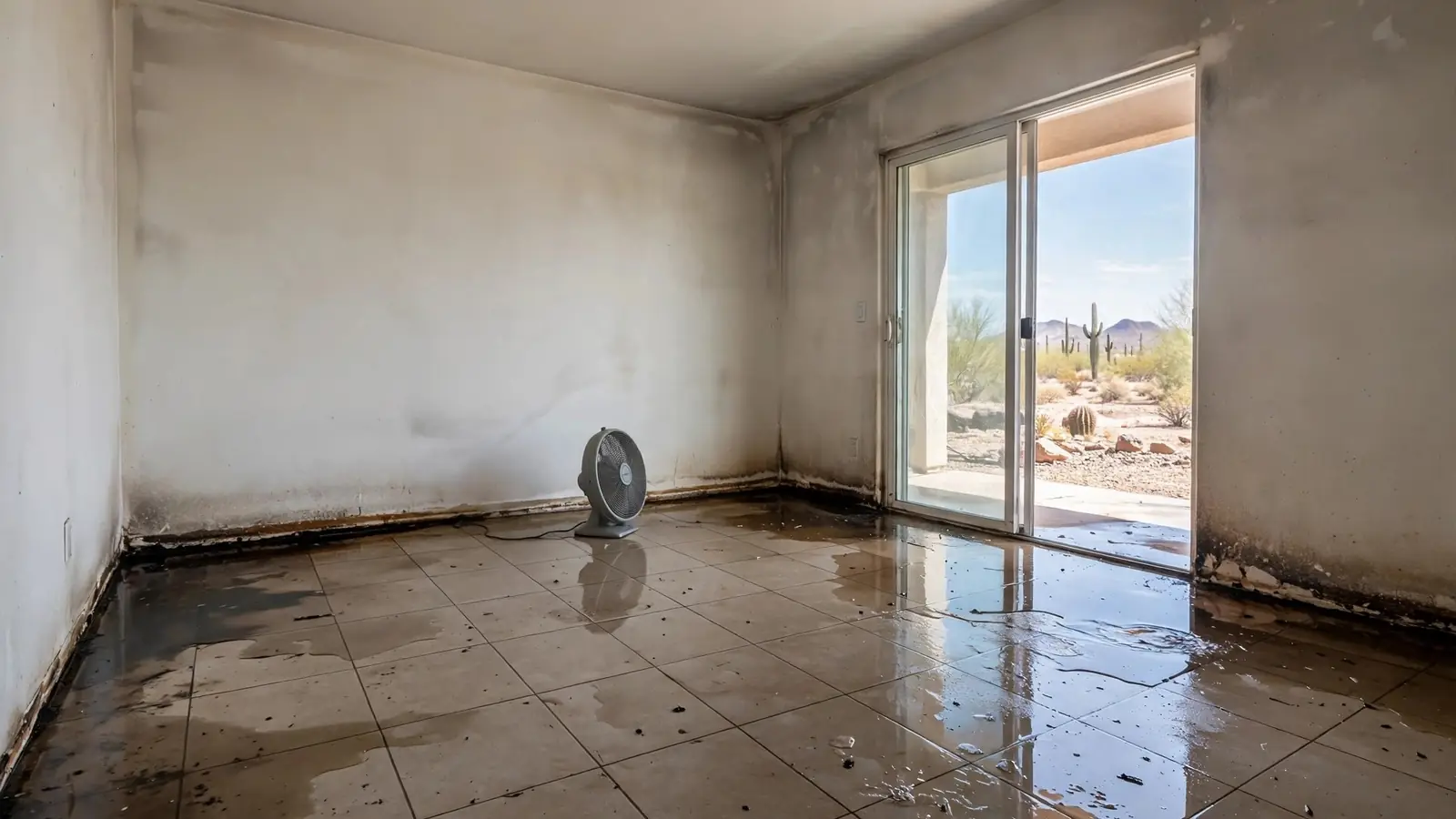
Key facts: Firefighting Water Damage
- Water used to fight a fire spreads well beyond the burned area and soaks materials that may look dry.
- The EPA advises drying water-damaged materials within 24 to 48 hours to help prevent mold growth [1].
- Firefighting water carries soot and debris, so porous materials it soaks are often removed.
- Ceilings holding water can sag and fall; keep people out from under them.
- Restoration crews commonly refer to the IICRC S500 document for drying work [2].
After the hoses
The water that stays when the fire is out
Water is the most effective way to stop a house fire, and firefighters use as much as the fire demands. Only some of it turns to steam. The rest runs across floors, soaks into walls, pools above ceilings and finds the lowest point it can, which in a slab home means under flooring and along the base of walls, and in a manufactured home means through the floor decking into the belly underneath.
That is why water damage after a fire is often more widespread than the fire. A kitchen fire may burn one wall of cabinets while its water soaks the dining room carpet, the hallway drywall and the lower cabinets.
The water is dirty too, carrying soot, ash and debris that stain materials and add odor. Drying usually starts right after the house is secured, and soot cleaning cannot finish until it is done.
Fire sprinklers, where installed, release far less water than hose lines, but even one activated head leaves an area that must be dried.
Warning signs
Signs water is still hiding
Sagging or bulging ceilings
Water above drywall makes it heavy. Keep away.
Swollen baseboards and door casings
Trim wicks water from wet floors.
Tide lines on walls
Stains show how far water wicked up.
Soft spots in a manufactured home floor
Particleboard or OSB decking swells and weakens when wet.
A musty smell after a few days
Mold may have started on damp materials.
Loose tile or peeling paint
Moisture beneath broke the bond.
Why speed matters
Why Mesa's dry air is not enough
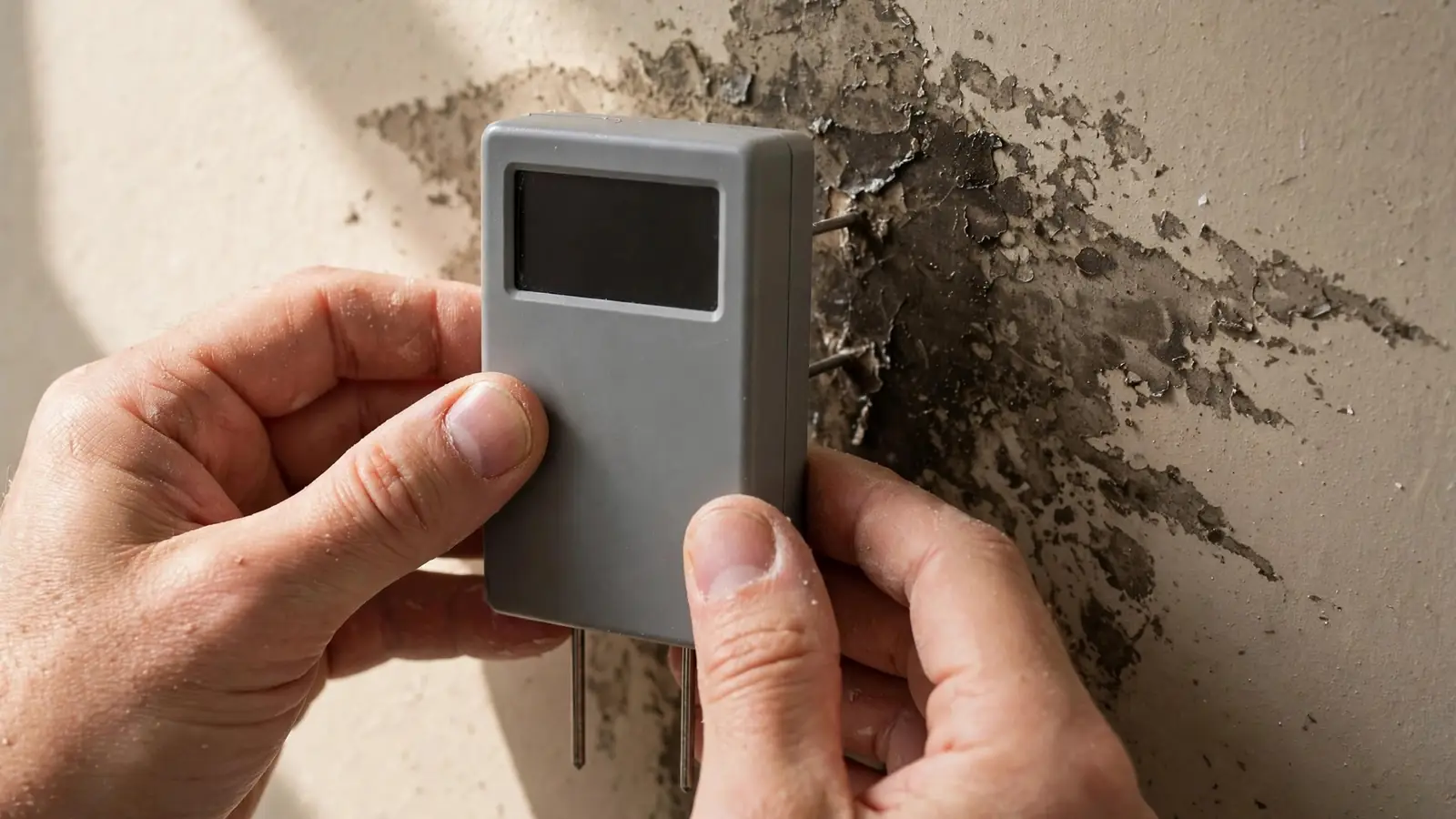
Mesa's air is usually dry, which leads some people to assume a wet house will dry itself. It will not. Water trapped inside wall cavities, under cabinets, beneath flooring and under a manufactured home is shielded from room air and can stay wet for weeks. Meanwhile drywall softens, particleboard swells, wood floors cup and insulation compresses.
Mold needs only moisture, something to feed on and warmth, and a closed Mesa house after a fire provides plenty of warmth. The EPA advises drying within 24 to 48 hours to help prevent mold growth [1]. During monsoon season, from mid-June to the end of September, higher humidity slows drying further [3].
Measuring
How wet areas are found and mapped
- 1
Look for the obvious
Standing water, stains, swelling and tide lines.
- 2
Meter hidden areas
Moisture meters read inside drywall, wood and flooring.
- 3
Thermal imaging
Infrared cameras show cool patches behind surfaces for meter checks.
- 4
Dry baseline
Readings in unaffected rooms show what dry looks like in this house.
- 5
Moisture map
Readings are recorded on a sketch and repeated daily.
Diagnosis
Water clues and what they mean
| What you see | What it usually means | Typical response |
|---|---|---|
| Standing water on floors | Heavy hose use | Extraction |
| Bulging ceiling | Water pooled above | Controlled removal, dry the cavity |
| Tide line on hallway drywall | Water wicked from wet carpet | Cut above the line, dry the wall |
| Soft manufactured home floor | Wet decking | Dry or replace decking, dry the belly |
| Swollen vanity base | Particleboard soaked | Replace the cabinet box |
| Damp block wall base | Block absorbed water | Extended drying, then seal |
The process
How a Mesa house is dried after a fire
Extraction comes first: pumps and extraction units pull standing water from carpet and hard floors far faster than evaporation. Soaked debris and ruined contents go out at the same time.
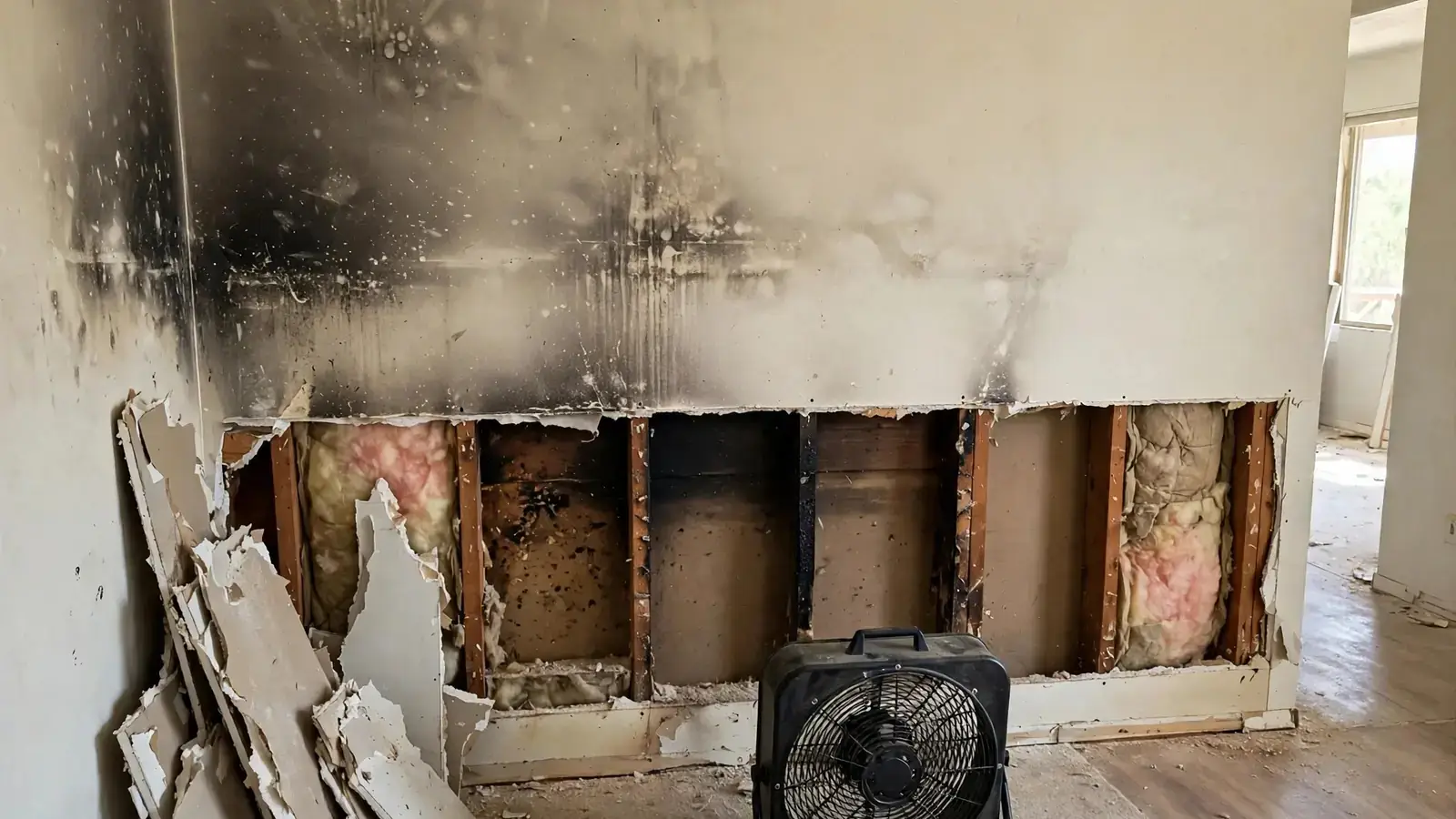
Next, materials that cannot dry in place are removed: carpet pad, soaked drywall above the wet line, wet insulation, swollen particleboard cabinets and baseboards. In manufactured homes, wet floor decking and the belly wrap and insulation underneath may need opening or removal.
Then drying equipment goes in: air movers across wet surfaces, dehumidifiers pulling moisture from the air, and directed drying into wall cavities, under cabinets and into the belly of a manufactured home. In Mesa's dry season, controlled use of outside air can help; during monsoon, closed-house dehumidification works better.
Readings are taken daily and equipment moved as areas dry. When materials match the dry baseline, the job moves on to soot cleaning, odor control and repairs.
Materials
Dry in place or remove
| Material | Usually | Why |
|---|---|---|
| Carpet pad | Removed | Holds water and contaminants |
| Carpet | Sometimes dried, often replaced | Depends on soot and time wet |
| Drywall, lightly damp | Dried in place | Recovers if dried quickly |
| Drywall, soaked | Cut out | Loses strength |
| Insulation | Removed | Holds water and odor |
| Block walls | Dried in place | Do not rot but dry slowly |
| Particleboard cabinets and decking | Usually replaced | Swells and weakens |
| Saltillo or ceramic tile | Dried; grout and underlayment checked | Water can sit beneath |
Before the crew arrives
Safe first steps with the water
Make sure power to wet areas is off before going near standing water; SRP or the fire department may already have disconnected it. Do not plug in fans until circuits are cleared.
If safe, mop small amounts of standing water, move dry belongings to a dry room, put furniture legs on blocks and open cabinet doors. Photograph everything wet before moving it, and stay out of rooms with sagging ceilings.
- Power off in wet areas
- Photos first
- Move dry belongings out
- Stay out from under sagging ceilings
- Gloves on; the water is dirty
The visit
What the drying crew does on day one
Expect inspection, moisture readings, photos, extraction, removal of soaked materials and equipment set-up. The crew will ask that equipment stays on. If the power is off, they may bring a generator or arrange temporary power. Ask how many days they expect and how often they will return for readings, and keep copies of the moisture logs for your insurer.
Mesa specifics
Drying fire-damaged homes in Mesa
Most site-built Mesa homes sit on concrete slabs, with carpet, tile or wood laid directly on top. Water under tile or wood on a slab can take a long time to dry. Painted block walls, common in older homes, absorb water at their base and dry slowly but do not rot; readings confirm when they are dry enough to seal and paint.
Manufactured homes are different. Their floors are usually particleboard or OSB decking on a steel chassis, with a plastic or fabric belly wrap holding insulation and ducts underneath. Water that soaks through the floor collects in the belly, where it stays hidden and can rot decking and grow mold. Drying may require opening the belly, removing wet insulation and drying the space before closing it again.
Summer heat speeds evaporation from exposed surfaces but also speeds mold on materials that stay wet in cavities. Monsoon storms can add water through fire-damaged roofs.
Prevention
Reducing water damage if there is ever a fire
- Keep an extinguisher in the kitchenA small fire put out early needs no hose.
- Know your water shut-offIf fire damages plumbing, shutting off the main stops a second flood.
- Maintain the roofA sound roof is easier to tarp after a fire.
- Consider sprinklers in a remodelThey control fires with far less water.
Related
Damage that travels with firefighting water
Wet soot
Wet soot is harder to clean.
Read moreMusty smoke smell
Damp materials hold odor.
Read moreRoof openings
Openings let monsoon rain in.
Read moreManufactured homes
Floors and belly need special drying.
Read more
Manufactured homes
Manufactured home floors and the belly underneath
A manufactured home sits on a steel chassis with floor joists supporting a deck of particleboard or oriented strand board. Underneath, a plastic or woven fabric sheet called the belly wrap or bottom board holds insulation, water lines and ductwork. When firefighting water soaks through the floor, it collects on that belly wrap, where nobody can see it.
Water held in the belly soaks insulation, can rot the floor decking from below and creates a damp, dark space where mold grows quickly in warm weather. Drying usually means opening the belly wrap in the wet area, pulling out wet insulation, drying the cavity with directed air and dehumidifiers, and then replacing insulation and patching the wrap. Swollen decking is cut out and replaced. Ducts in the belly are inspected for water and soot.
Because manufactured homes are lighter and more compact, a contractor may recommend more removal than in a site-built house. Ask what they expect and why.
Cabinets
Kitchens, bathrooms and cabinets
Water reaching a kitchen or bathroom runs under the toe kicks and soaks the bottom of the cabinet boxes, which in many Mesa homes are particleboard. These swell quickly and are hard to dry. Contractors often pull toe kicks to get air underneath, drill small holes behind baseboards to ventilate wall cavities, or remove swollen lower cabinets. Countertops are supported or removed carefully. Dishwashers, ranges and refrigerators are pulled to dry the floor beneath.
Floors
Saltillo, ceramic tile and wood floors
Saltillo and other clay tiles are popular in Mesa homes. Sealed saltillo resists water at the surface, but water can enter through grout and worn sealer and sit in the tile body and mortar beneath. Ceramic and porcelain tile do not absorb water, but grout and the setting bed can. Loose or hollow-sounding tiles signal water underneath.
Wood floors cup when wet and may flatten if dried carefully, then be sanded and refinished. Laminate swells permanently and is usually replaced. Carpet on slab is lifted, the pad discarded and the slab dried.
Timing
A typical drying timeline
| Day | What happens |
|---|---|
| Day 1 | Water pulled out, soaked materials removed, dryers placed, first readings logged |
| Day 2 | Readings, equipment moved, more removal if needed |
| Days 3-4 | Most surfaces near dry; dense materials and block still drying |
| Days 4-5+ | Final readings at dry standard; equipment out |
| After drying | Soot cleaning, odor control and repairs |
Contents
Wet belongings after a fire
Furniture standing in water wicks it up; lift pieces onto blocks or move them to a dry room. Rugs should be lifted and sent for cleaning. Wet clothing and linens left in piles smell and can grow mold within days in warm weather. Wet photographs, documents and books stick together and grow mold quickly; freezing them buys time until they can be dried properly. Electronics that got wet should stay unplugged.
On your call
Questions for a drying contractor
Ask how they measure moisture and how often they will return. Ask whether they expect to remove drywall, flooring, cabinets or belly insulation, and why. Ask how they will dry under tile, under cabinets and in any manufactured home belly, and whether they need temporary power. Ask how contaminated water and debris are handled and how the drying log will be shared with you.
Water categories
Why firefighting water is treated as contaminated
Restorers classify water by how contaminated it is. Clean water from a broken supply pipe is least concerning; water that has picked up contaminants is handled more cautiously. Firefighting water passes through burning materials and soot before it settles, so it is not clean. Porous materials it soaks, such as carpet, pad, drywall and insulation, are more likely to be removed than dried in place, and anyone handling wet debris should wear gloves and boots and wash afterwards.
If the fire also damaged plumbing, water may have kept flowing after the fire was out. Closing the main water valve, once it is safe, stops that second source.
Two storeys
Upstairs fires in two-storey homes
Newer two-storey homes in east Mesa send firefighting water from an upstairs fire into the floor cavity and onto the ceiling below. Downstairs ceilings can sag, recessed lights fill with water, and insulation and wiring in the floor cavity get soaked. Drying usually means opening sections of the ceiling below, removing wet insulation and drying until readings are normal. Light fixtures in that ceiling should be checked by an electrician before use.
Older homes
Block walls and slab edges
Painted concrete block walls in older Mesa homes absorb water at their base when floors flood. Block does not lose strength or rot, but it releases moisture slowly, and paint applied too soon can blister. Readings at the base of block walls guide when they are dry enough to seal and repaint. Where drywall is furred out over block, the space behind may hold water and needs opening or ventilating.
Outside, water from firefighting can pool against the foundation. Direct it away from the house and clear debris from yard drains, especially before monsoon storms add more water.
Checking the work
Signs the drying was done properly
Final moisture readings in affected materials should match the dry readings taken in unaffected rooms. There should be no musty smell, no new stains or swelling on baseboards and cabinets after the equipment leaves, and walls with wet insulation should have been opened rather than dried only from the surface. You should receive a written drying log showing daily readings and where equipment was placed.
If any of these are missing, ask the contractor before repairs close up the walls. Moisture sealed inside a wall is far harder to deal with later.
FAQ
Mesa questions about water after a fire
Will Mesa's dry air dry my house on its own?
Not inside walls, under flooring or under a manufactured home. Those areas need targeted drying.
How quickly can mold grow?
The EPA advises drying within 24 to 48 hours to help prevent mold.
Can wet drywall be saved?
Lightly damp drywall dried quickly often can. Soaked drywall is usually cut out.
Why are they cutting my walls?
To remove wet material and let air reach the cavity and framing.
Does my manufactured home's belly need drying?
If water soaked through the floor, yes. Wet insulation and decking there can hide moisture.
Do block walls need replacing after getting wet?
Usually not. Block dries slowly but does not rot; it is dried and then sealed and painted.
How long does drying take?
Often several days, depending on materials and weather.
Is firefighting water part of the fire claim?
Water used to put out a covered fire is generally treated as part of the fire loss. Check with your adjuster.
Can water in a manufactured home's belly cause mold?
Yes. It is hidden, warm and dark. The belly is usually opened to remove wet insulation and dry the cavity.
Will my saltillo tile need replacing?
Not always. It may dry in place; loose or cracked tiles and damaged grout are repaired.
Should I freeze wet photos?
If they cannot be dried properly within a day or two, freezing them in sealed bags prevents mold until a specialist can help.
Why are my lower cabinets being removed?
Particleboard boxes swell and weaken when soaked, and removal lets the wall and floor behind dry.
Is firefighting water dangerous?
It carries soot, ash and debris. Wear gloves and boots and wash skin that touches it.
Should I turn off the main water valve?
If the fire damaged plumbing and water is still running, yes, once it is safe to reach the valve.
How do I know when block walls are dry?
Moisture readings at the base of the wall confirm it. Paint applied too soon can blister.
Will water outside hurt my foundation?
Pooled water should be directed away from the house; clear drains before storms.
Will my hardwood floors be ruined?
Not necessarily. Floors dried promptly often flatten enough to sand and refinish.
Can I use my own fans?
Only after an electrician clears the circuits. Household fans help a little but do not replace professional equipment.
Can mold grow inside walls I cannot see?
Yes. That is why contractors read moisture inside cavities and open them when insulation is wet.
Why does my house feel humid?
Evaporating water raises indoor humidity; dehumidifiers bring it down.
Do I need to empty the house for drying?
Usually not entirely. Items in wet rooms are moved or raised.
Can wet insulation in the attic be dried?
Usually not reliably. Wet insulation compresses and holds water and smoke odor, so it is normally removed and replaced.
Does sprinkler water cause less damage?
Sprinklers release far less water than hoses and usually limit damage, but the area below an activated head still needs drying.
What happens to wet electronics?
Leave them unplugged. Water and soot together can short and corrode circuits; have them inspected.
Can my wet couch be saved?
Sometimes, if dried quickly and the water was limited. Foam that soaked up dirty water is often replaced.
Who checks my electrical system after water damage?
A licensed electrician should inspect circuits that got wet before power is restored to them.
Should I open windows to help drying?
In dry, cool conditions it can help a little, but closed-house dehumidification is usually faster and avoids dust, especially in summer and monsoon.
Does drying equipment use a lot of power?
Yes. The crew will plan circuits or bring a generator if needed; keep the equipment running.