
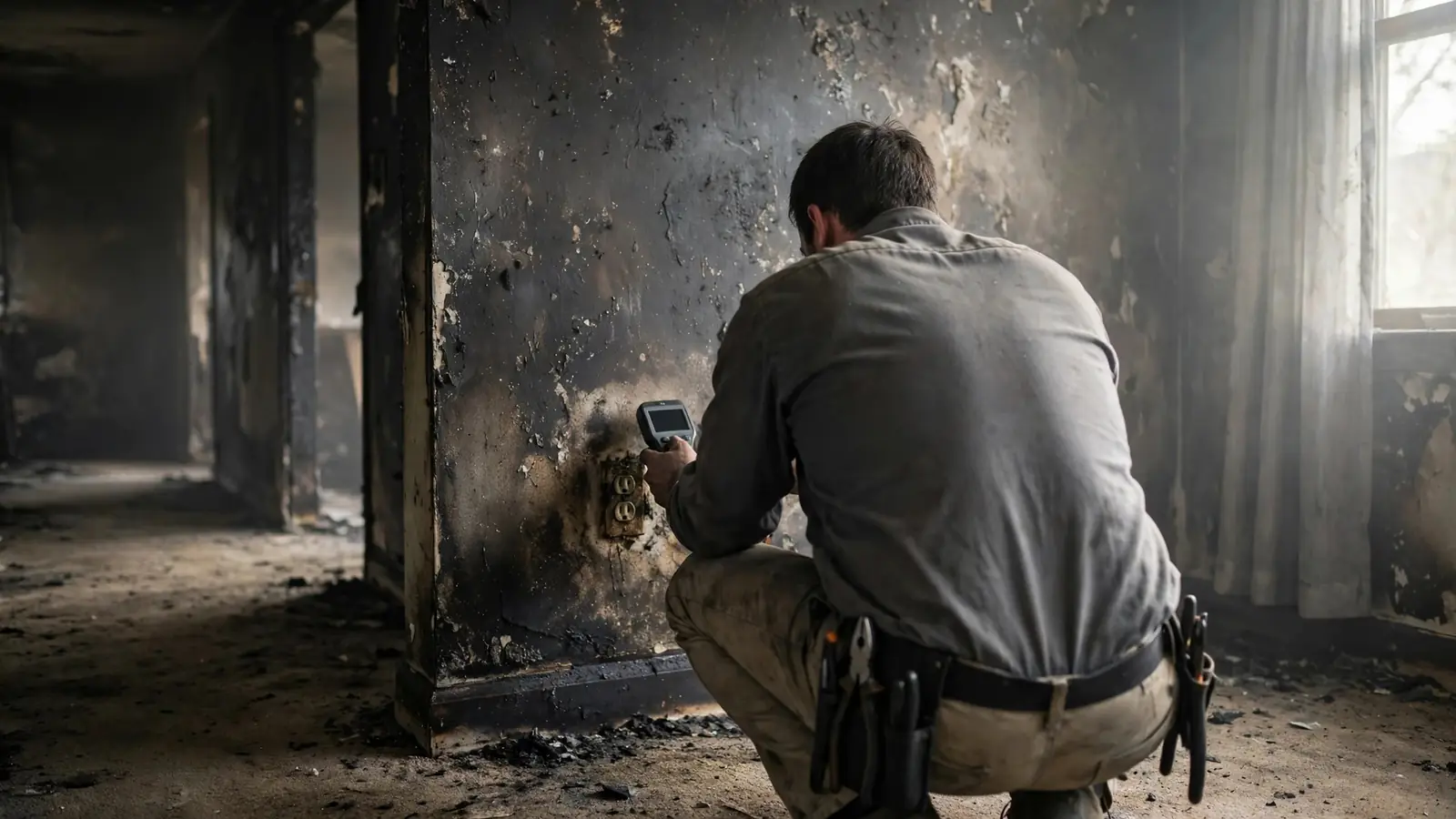
Key facts: Electrical fire warning signs
- Electrical distribution and lighting equipment are involved in tens of thousands of U.S. home fires each year [1].
- Warm or discoloured outlets, frequent breaker trips and a burning smell are warning signs [1].
- Electrical fires can start inside walls and smoulder before discovery.
- Have a qualified electrician inspect any warning sign promptly.
Background
Why electrical fires are different
Many electrical fires begin where people cannot see them: inside walls, in the attic, behind appliances or in an overloaded outlet. They may smoulder for some time, producing heavy, acrid smoke from burning wire insulation before flames appear or alarms sound. By the time they are found, smoke may have spread through wall cavities and the attic along the path of the circuit.
That makes early warning signs especially valuable. The NFPA lists signs that call for an electrician: frequent breaker trips or blown fuses, outlets or switches that feel warm or look discoloured, a burning or rubbery smell, flickering or dimming lights, and sparks from an outlet [1].
Signs
Warning signs to act on
Breakers that trip repeatedly
A circuit may be overloaded or have a fault.
Warm or discoloured outlets
Heat at an outlet or switch plate is a red flag.
Burning or hot plastic smell
Especially without an obvious source.
Flickering lights
Loose connections can arc and heat up.
Sparks or buzzing
Never ignore sparks from an outlet or switch.
Cords that get hot
Overloaded extension cords and power strips.
What to do
If you notice a warning sign
- 1
Stop using the circuit
Unplug devices and switch off the breaker if safe.
- 2
Do not ignore heat or smell
Warm outlets and burning smells need attention the same day.
- 3
Call an electrician
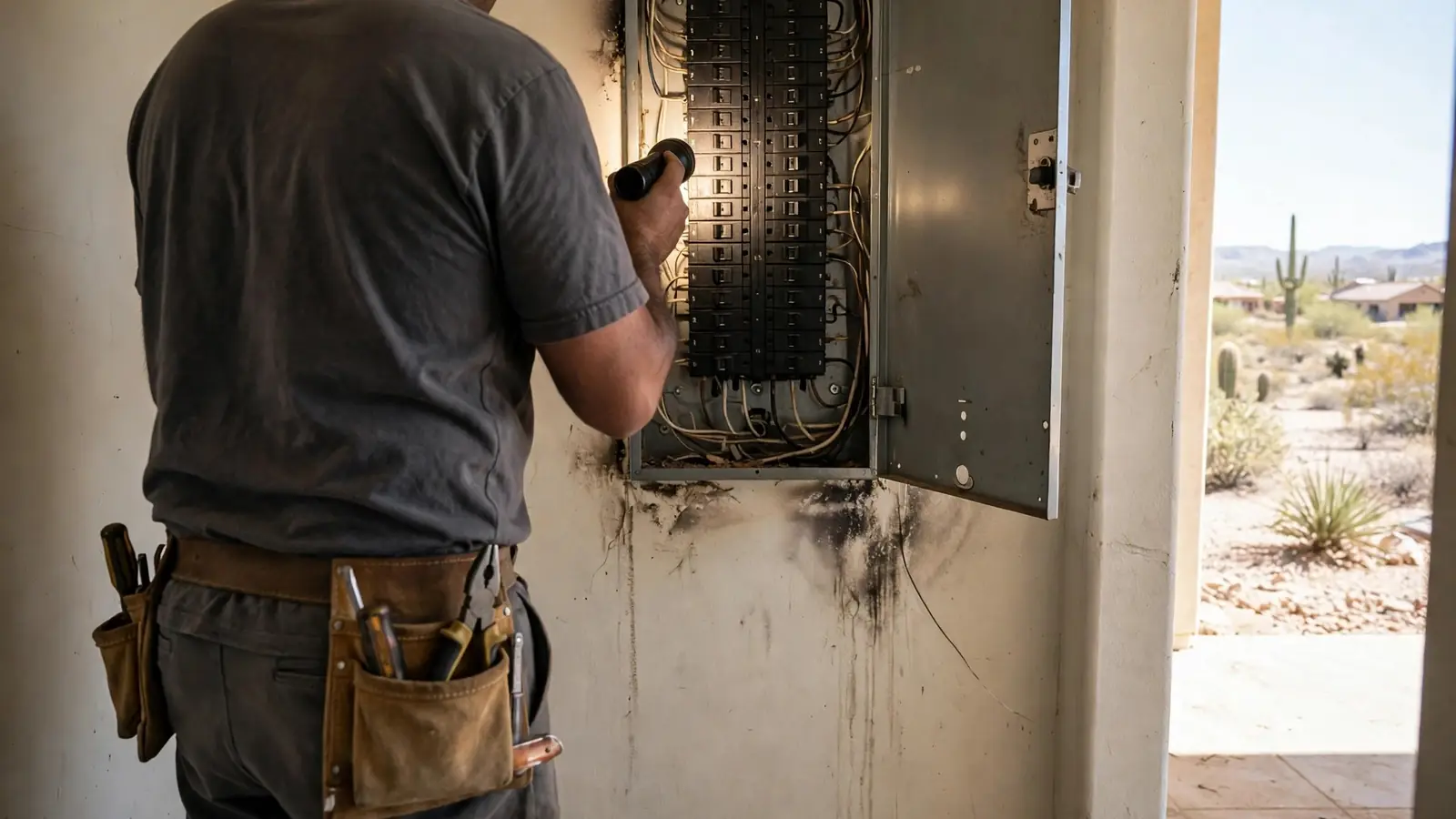
A licensed electrician should inspect the circuit and panel.
- 4
If there is smoke or flame
Get everyone out and call 911.
- 5
Check smoke alarms
Make sure alarms work in every bedroom and on every level.
Restoration
After an electrical fire
When an electrical fire has happened, an electrician should inspect the panel and affected circuits before power is restored. Restoration contractors check wall cavities and the attic along the circuit path for smoke and soot, because these fires often spread smoke inside walls. Burned wiring insulation leaves a sharp odor that needs source removal and sealing.
In older Mesa homes, the electrician may recommend upgrades while walls are open, such as replacing damaged circuits or adding arc-fault protection. Ask your insurer how code-required upgrades are handled.
Prevention
Common causes and prevention
| Cause | Prevention |
|---|---|
| Overloaded outlets and cords | Plug heat-producing appliances directly into wall outlets |
| Damaged cords | Replace frayed or crushed cords |
| Loose connections | Have flickering lights and warm outlets checked |
| Old wiring and panels | Have older systems evaluated |
| Lighting with wrong bulbs | Use bulbs of the rated wattage |
| Charging batteries | Use the right charger and avoid charging damaged batteries |
Local notes
Mesa heat and electrical load
Summer cooling puts heavy, continuous loads on home electrical systems in Mesa. Older homes may have panels and wiring sized for smaller loads. Pool pumps, electric vehicle chargers and extra refrigerators add to the demand. If your home is older or has had many additions, an electrician's evaluation is worthwhile, especially before summer.
AFCI and GFCI
Protective devices that help
Arc-fault circuit interrupters, or AFCIs, are designed to detect the kind of arcing in wiring that can start fires and cut power before a fire begins. Ground-fault circuit interrupters, or GFCIs, protect against electric shock in wet areas. The NFPA recommends testing AFCIs and GFCIs monthly according to the manufacturer's instructions [1]. Many older Mesa homes have few or none; an electrician can advise where to add them.
Smoke alarms are the last line of defense. Make sure there is one in every bedroom, outside sleeping areas and on every level, and test them monthly [2].
Everyday habits
Extension cords, power strips and appliances
Extension cords are meant for temporary use. Running them under rugs, through doorways or behind furniture can damage them and hide heat. Plug only one heat-producing appliance, such as a space heater, toaster or hair dryer, into an outlet at a time, and plug those appliances directly into the wall. Replace cords that are frayed, cracked or crushed, and use appliances listed by a recognised testing laboratory.
Electrical panel
Signs inside the panel
An electrical panel that is warm to the touch, makes buzzing noises, has rust or scorch marks, or has breakers that will not stay reset needs an electrician's attention. Older panels from certain manufacturers have known reliability issues; an electrician can tell you whether yours is one of them. Do not open the panel cover yourself.
Newer equipment
Electric vehicles, solar and batteries
Many Mesa homes now have solar panels, electric vehicle chargers, home batteries and e-bikes. Each adds connections and charging equipment that should be installed by qualified professionals and checked if anything seems wrong. Use the charger supplied by the manufacturer, avoid charging damaged batteries, and do not leave e-bikes or scooters charging unattended overnight. If a charger or battery feels hot, smells or makes noise, unplug it if safe and have it checked.
FAQ
Electrical fire questions
Is a warm outlet dangerous?
It can be. Stop using it and have an electrician check it.
Can an electrical fire start inside a wall?
Yes. Faults in hidden wiring can smoulder before anyone notices.
Does homeowners insurance cover electrical fires?
Many policies cover fire damage from electrical faults, but check your policy.
What should I do after an electrical fire?
Have an electrician inspect before restoring power and a restoration contractor check walls and attic for smoke.
How often should I test smoke alarms?
Monthly, and replace alarms that are ten years old or older.
Are space heaters safe?
They can be if plugged directly into a wall outlet, kept three feet from anything that burns and never left unattended.
Can I replace an outlet myself?
Electrical work should be done by a qualified electrician, especially if an outlet shows heat damage.
Why do my lights dim when the AC starts?
Large loads can cause brief dimming, but frequent or severe dimming should be checked by an electrician.
Does a burning smell always mean fire?
Not always, but treat it seriously. Switch off the circuit and have it checked.
Are surge protectors enough?
They protect devices from surges but do not prevent overloads or wiring faults.
Should I unplug appliances when I travel?
Unplugging non-essential appliances reduces risk, especially for seasonal homes left empty for months.
Can old light fixtures be a fire risk?
Yes, especially with the wrong bulb wattage or damaged wiring. Have old fixtures checked.