
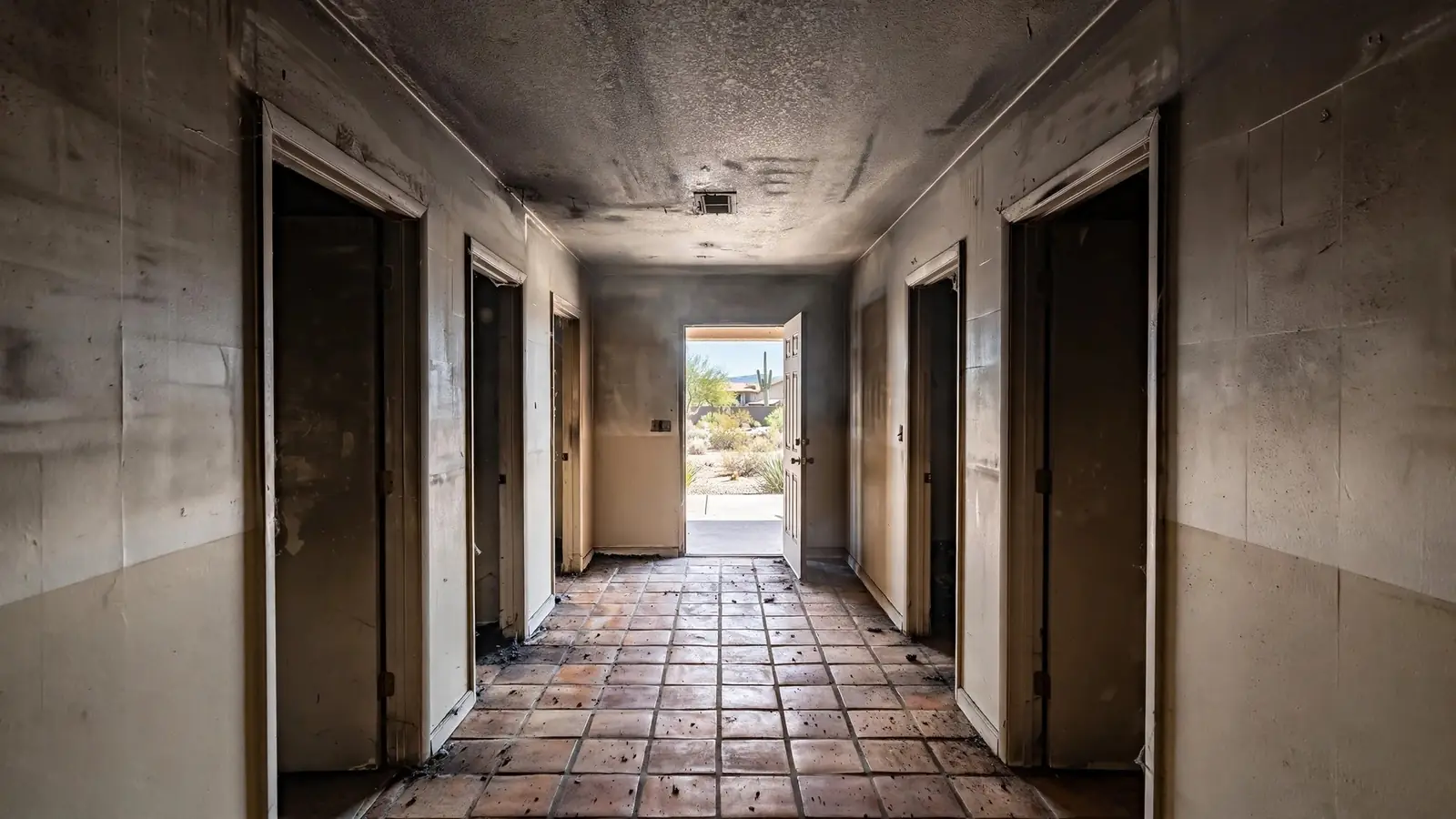
Key facts: Smoke Damage Cleanup
- Smoke contains fine particles and gases; the particles leave residue and much of the odor [1].
- Smoke moves under pressure through door gaps, attics and ductwork into rooms far from the fire.
- Cooling systems running during a fire can carry smoke to every room they serve.
- Acidic residue can yellow plastics and tarnish metal if left for days.
- Fire officials decide when a fire-damaged home is safe to re-enter [2].
Understanding smoke damage
What smoke actually does to a house
Smoke is the airborne by-product of burning: hot gases carrying microscopic solid and liquid particles. As it spreads and cools, the particles settle on surfaces and the gases sink into anything absorbent. Restorers call the result smoke damage, separate from heat damage, where materials charred or melted, and from heavy soot close to the fire.
Smoke damage takes three forms. Discoloration ranges from a faint grey film on white trim to brown staining on ceilings. Odor can soak into drywall, insulation, carpet, cabinets and soft furnishings and keep returning. Chemical attack comes from acidic residue that slowly etches metal fixtures, yellows plastics and stains grout.
Time makes each worse. Fresh residue sits on top of surfaces; after several days it starts reacting with them. Mesa's summer heat speeds that process in a closed house without cooling.
Cleanup aims to find every place smoke reached, remove or clean what it touched, neutralize odor at its source and seal what remains, not simply to make the house smell better for a week.
Warning signs
Clues that smoke went further than you think
Go through each room, open closets and cabinets, and sniff close to walls and fabrics.
Dark bands above doorways
Smoke flowed through the gap at the top of the door.
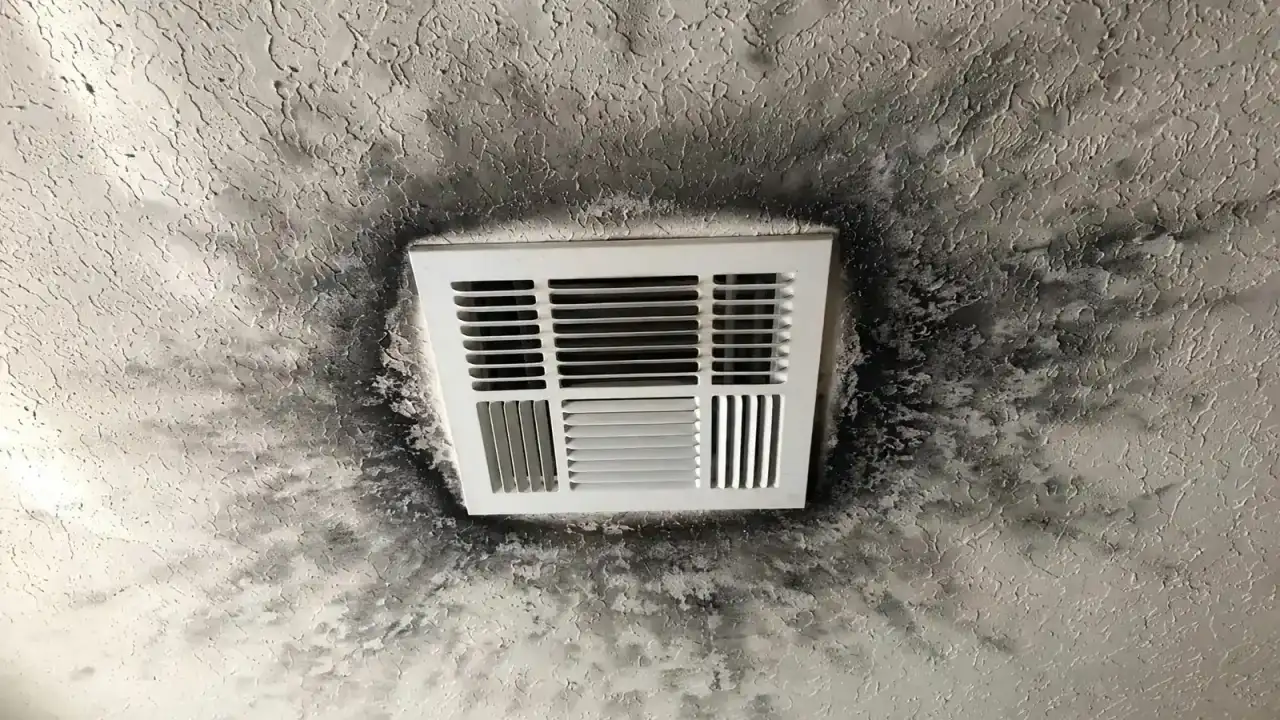
Rings around vents
Smoke moved through ducts and left residue where air entered or left a room.
Odor inside closed closets
Fabrics behind closed doors soak up smoke under pressure.
Yellowed switch plates
White plastic shows residue early.
Film on mirrors in far rooms
Fine particles reached that part of the house.
Smell when the cooling starts
Ducts, the air handler or cooler pads may hold residue.
Fire type
Why some fires leave far more smoke
A fast, hot fire with plenty of air burns more completely and leaves less residue, though it can push smoke a long way. A slow, smouldering fire, such as an electrical fault inside a wall, a mattress or a garage fire with little air, produces dense, oily smoke and usually more damage to the rest of the house.
Modern furniture and electronics contain a lot of plastic and foam, which burn into heavy, sticky smoke with a chemical smell. Kitchen fires add burned-food residue that is thin but smells strongly. Telling the contractor what burned and for how long helps them predict how far the smoke went.
Assessment
How a contractor maps the smoke
- 1
Start at the origin
The burn pattern shows how hot and how long the fire was.
- 2
Follow the shadow lines
Residue along ceilings and door heads shows where smoke flowed.
- 3
Open closed spaces
Closets, cabinets, drawers and the attic access are checked.
- 4
Check cooling systems
Refrigerated air ducts, the air handler and any evaporative cooler.
- 5
Test surfaces
Cleaning tests show which finishes will recover.
- 6
Document
Photos and notes for each room build the record your insurer needs.
Diagnosis
Smoke clues and what they usually mean
| What you notice | What it suggests | Likely response |
|---|---|---|
| Haze only near the fire | Short fire, limited spread | Clean the affected rooms |
| Haze and odor in every room | Smoke carried by the cooling system | Whole-house cleaning and duct work |
| Strong odor in cabinets | Smoke forced into closed spaces | Clean and seal cabinet interiors |
| Worse smell on hot afternoons | Odor in attic insulation or decking | Attic cleanup and sealing |
| Tarnished faucets and hardware | Acidic residue left too long | Specialist cleaning, or new fixtures |
| Smoke smell after the cooler runs | Residue in cooler pads and ducts | Replace pads, clean cooler and ducts |
The process
How smoke cleanup is organised
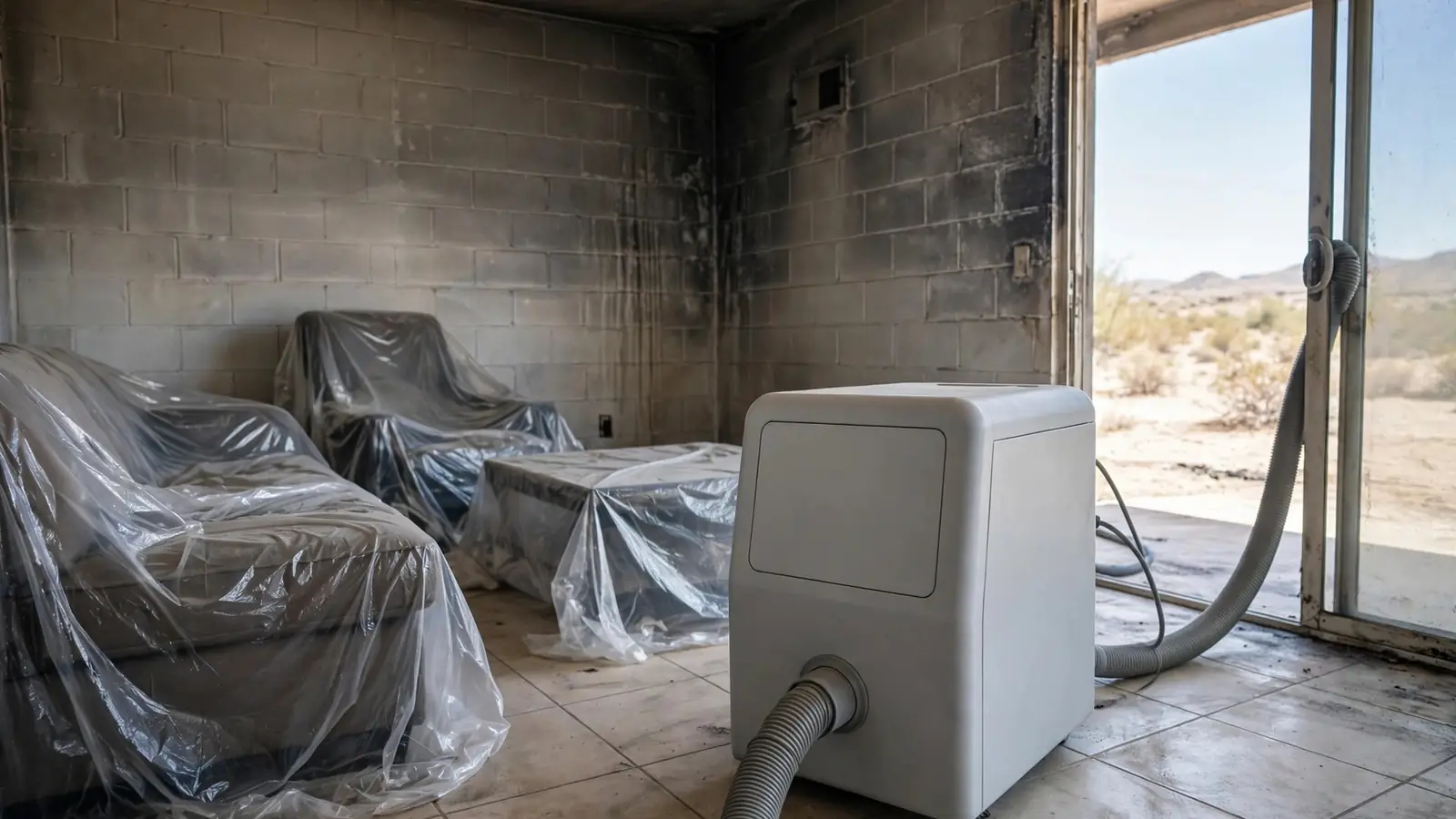
Air quality comes first. HEPA air scrubbers capture particles disturbed during cleaning, protecting the crew and keeping cleaned rooms clean. In Mesa's heat and dust, sealed-room filtration usually works better than opening windows.
Structure cleaning runs from ceilings down. Loose residue is removed with HEPA vacuums and dry sponges, followed by cleaners matched to the residue. Hard surfaces are cleaned and, where acid has already etched them, polished or replaced.
Contents are sorted into items cleaned on site, items sent for specialist cleaning and items that cannot be saved. Clothing and linens go to smoke-capable cleaners; furniture is cleaned according to its materials; electronics stay unpowered for inspection. Everything leaving the house is listed and discarded items are photographed.
Cooling systems are then cleaned if smoke reached them: ducts, registers, the air handler and coil, or the pads and housing of an evaporative cooler. Odor treatment, sealing and painting finish the job.
Contents
How belongings are usually handled
| Item | Usual approach | Tip |
|---|---|---|
| Clothes and linens | Smoke laundering or dry cleaning | Do not wash them at home first |
| Upholstered furniture | Cleaning and deodorizing | Foam may need replacing |
| Wood furniture | Cleaning and refinishing if dulled | Act before residue clouds the finish |
| Electronics | Inspection before power-on | Residue can corrode circuits |
| Dishes and cookware | Hand or ultrasonic cleaning | Discard any food that was exposed |
| Books and papers | Dry cleaning; freeze if wet | Photograph key papers before cleaning |
| Rugs and carpet | Cleaning or replacement | Pad is usually replaced |
Before the crew arrives
Safe things to do right now
Once the fire department has cleared the house, photograph every room before moving anything. Turn off the thermostat fan and any evaporative cooler and replace the filter. Throw away food and medicine exposed to heat or smoke. Bag a few changes of clothes and take them to a cleaner who handles smoke.
Avoid scented sprays and candles, which add residue and mask the problem. Do not rent an ozone machine; ozone irritates the lungs and is meant for trained use in empty buildings only [3]. Leave electronics unplugged.
- Photos first
- Cooling off, new filter
- Toss exposed food
- No candles or fresheners
- No DIY ozone
The visit
What to expect at the first visit
The contractor will ask where the fire started, how long it burned, whether water was used and whether cooling was running. They will check every room, the garage and, if safe, the attic. Have your insurance claim number ready if you have one.
Ask them to explain what they see: which rooms need only cleaning, which need sealing and painting and which contents should go out for specialist cleaning. Once work starts, ask who your contact is and how the work will be sequenced; many families stay elsewhere for part of it.
Mesa specifics
Mesa homes and how smoke moves through them
Much of Mesa's housing is single-storey, with one attic spanning the whole floor plan and the air handler or ducts up there too. Smoke reaching the attic spreads end to end and drops back through ceiling vents and light fixtures. Older block homes sometimes still use evaporative coolers, which push large volumes of air through the house and can spread smoke widely if running during a fire. Newer two-storey homes in east Mesa send smoke up stairwells to bedrooms.
Manufactured homes, common in Mesa, have compact layouts and ducts under the floor, so smoke reaches every room quickly and residue collects in the belly ductwork. Retirement communities often house residents who are especially sensitive to smoke.
Summer heat matters too. A closed house without cooling gets very hot, softening residue and releasing more odor. Restoring safe cooling or using temporary cooling is often an early priority.
Prevention
Limiting smoke damage next time
- Working smoke alarmsAlarms in each bedroom, outside sleeping areas and on every level give early warning [4].
- A kitchen extinguisherA small stovetop fire put out quickly leaves little smoke.
- Know the thermostat and cooler switchesTurning them off during a fire limits spread.
- Sleep with doors closedClosed doors slow smoke between rooms.
- Arrange checks on a seasonal homeFires found early cause far less damage.
Keep or discard
Which smoky belongings to keep
Hard, non-porous items almost always clean. Porous items depend on how close they were and how heavy the residue is. Heirlooms and photographs are worth discussing with the contractor even if they look bad. Food, medicine and cosmetics exposed to heat or smoke should go, and mattresses and pillows that absorbed heavy smoke are usually replaced. Keep a list and photos of everything discarded.
Related
Damage that often travels with smoke
Heavy soot near the fire
Thick deposits need their own methods.
Read moreOdor that will not leave
Smell that survives cleaning needs source treatment.
Read moreWet drywall and carpet
Hose water must be dried first.
Read moreCandle and holiday fires
Small fires that leave widespread smoke.
Read more
Manufactured homes
Smoke in Mesa's manufactured homes
Manufactured homes make up a large share of housing in parts of Mesa, particularly in communities along the east and central corridors. These homes are compact, with rooms close together, and their heating and cooling ducts usually run through the belly of the home beneath the floor. During a fire, smoke fills the whole home quickly and is pushed into the belly ducts if the system is running.
Wall and ceiling panels in manufactured homes are often gypsum covered with vinyl or paper, or decorative paneling. These finishes stain differently from painted drywall and some do not tolerate strong cleaners. Cleanup usually involves gentle, panel-appropriate cleaning, replacement of heat-damaged panels, and cleaning or replacing belly ductwork. Our manufactured home guide explains the specifics.
Older households
Retirement communities and older residents
Mesa has several large age-restricted communities and many older homeowners. Smoke residue and the cleaning process are harder on older adults, especially those with heart or lung conditions, oxygen equipment or limited mobility. Temporary housing during the heavier stages of cleanup is often the safer choice.
Restoration crews working in these communities should plan for accessibility: clear paths, careful handling of medical equipment and medications, and coordination with family members who may be helping from out of town. Gated communities may need advance notice for contractor access.
Winter visitors
Seasonal homes and late-discovered smoke
When a fire happens in a seasonal home while the owner is away, smoke residue can sit for weeks in a closed, hot house before anyone notices. Heat drives residue deeper into finishes and fabrics and intensifies odor. These jobs often need more removal of porous materials than a fire dealt with the same day.
If you own a seasonal home in Mesa, arrange for someone to check it regularly in summer and consider smoke alarms that can alert you or a neighbor remotely.
Sequence
Typical order of work on a Mesa smoke job
| Stage | Main tasks |
|---|---|
| First visit | Walk-through, photos, containment, air scrubbers |
| Early days | Water removal if needed; contents sorted and packed out |
| Cleaning | Ceilings to floors, room by room |
| Systems | Duct, air handler or cooler cleaning |
| Odor | Deodorizing where needed |
| Finishing | Sealing, painting, contents returned |
Paperwork
Keeping the claim organised
Smoke claims often grow as more rooms are inspected. Ask the contractor for photos of each affected room before and after cleaning, notes on what was cleaned, sealed or replaced, and an inventory of contents sent out and returned. Point out lightly affected rooms to your adjuster; they are easy to overlook next to the burned area. Keep receipts for temporary housing and other added expenses.
Newer homes
Two-storey homes on the east side
Newer neighborhoods in east Mesa, such as Eastmark and communities near the Superstition Freeway, include many two-storey homes with open stairs and lofts. Smoke from a ground-floor fire rises quickly to the upstairs bedrooms, which often end up more affected than rooms next to the fire. Upstairs cleaning and the upstairs HVAC zone usually become priorities.
Garages
Garage fires in Mesa homes
Attached garages in Mesa often hold vehicles, golf carts, tools, freezers, pool chemicals and stored belongings. Garage fires burn hot and produce dark, oily smoke that pushes through the door into the laundry or kitchen and through the ceiling into the attic over the house. Cleanup typically covers the garage structure, the shared attic and every room near the garage. Batteries, fuel and chemicals should be left for professionals.
Outside smoke
Smoke from brush fires near the city edges
Mesa borders desert to the north and east, near the Usery Mountains and the Tonto National Forest, and brush fires there can send smoke into neighborhoods. Smoke from outside enters through windows, attic vents, gaps and especially evaporative coolers. It usually leaves lighter residue concentrated in filters, ducts, cooler pads and fabrics. Replacing filters and pads, laundering fabrics and cleaning ducts if odor lingers usually resolves it.
Layouts
Two-storey and single-storey differences
In single-storey homes, the attic links every room, so smoke that reaches it can drop into bedrooms at the far end. In two-storey homes, stairwells and lofts carry smoke up, so upstairs rooms are often worse. Contractors plan the cleaning order around these paths, starting where residue is heaviest and protecting cleaned rooms from re-soiling.
Telling the contractor about your layout, cooling system and where the fire started lets them predict the smoke path before they arrive.
Insurance
Smoke damage claims in Arizona
Many homeowner policies cover smoke damage from a covered fire, along with additional living expenses while the house cannot be lived in. Coverage and limits differ, so read your policy and ask your adjuster what applies. If you have concerns about how a claim is being handled, the Arizona Department of Insurance and Financial Institutions takes consumer questions and complaints [5].
Keep a simple folder of photos, receipts, contractor reports and notes of every call with your insurer. It saves time later.
FAQ
Smoke damage questions from Mesa homeowners
How far can smoke travel inside a house?
Often through the whole house, under pressure through door gaps, wall cavities, the attic and the ductwork.
Can a nearby brush fire cause smoke damage inside?
Yes. Smoke can enter through windows, vents and evaporative coolers and leave residue and odor.
Should I run my AC or cooler to clear the smoke?
Not until it has been checked. A contaminated system spreads residue.
Do air fresheners help?
They cover the smell briefly. The odor comes from residue that must be removed or sealed.
Is it safe to stay in a smoke-damaged home?
That depends on damage and health. The fire department decides when the house can be entered.
Can smoke damage electronics?
Yes. Residue can corrode and short circuits; leave devices unplugged until inspected.
What is the difference between smoke damage and soot?
Soot is heavier carbon residue near the fire. Smoke damage is the lighter film, staining and odor through the house.
Does Arizona homeowners insurance cover smoke damage?
Many policies cover smoke from a covered fire. Check your policy; the Arizona Department of Insurance and Financial Institutions handles consumer questions.
Do manufactured homes need different smoke cleanup?
Often. Wall panels, ceiling panels and belly ductwork need methods suited to them.
How do I know cleanup worked?
Surfaces look clean, the house does not smell of smoke on a hot afternoon and the cooling system does not release odor when it starts.
Can older relatives stay in the house during cleanup?
For the heavier stages, temporary housing is usually safer, especially for anyone with heart or lung conditions.
Does a gated community need notice for contractors?
Usually. Tell the contractor about gate access when you call so they can plan.
Can brush fire smoke damage my house?
It can leave residue and odor, especially if windows were open or an evaporative cooler was running. Replace filters and pads and clean fabrics.
Will cleaning crews need to come back?
Often. Smoke jobs are staged across cleaning, drying, odor treatment and painting, with a final check.
Do I need to empty every closet?
Usually only closets that took smoke. The contractor checks each one.
Should I wash smoky walls before the crew arrives?
No. Wiping with water tends to smear residue into paint.
Are light fixtures cleaned too?
Yes. Fixtures and fan blades collect residue on top and are cleaned or replaced.
Do window screens and blinds need cleaning?
Usually. Screens, blinds and tracks collect residue and are cleaned or replaced.
Can smoke damage show up days later?
Yes. Acidic residue can keep yellowing plastics and tarnishing metal, and odor often grows as the weather warms.
Should I keep smoky clothes in bags?
Bag them loosely to move them, then get them to a smoke-capable cleaner soon; sealed damp bags can grow mildew.
Can my outdoor furniture be cleaned?
Usually. Hard furniture cleans easily; cushions that absorbed smoke may need professional cleaning or replacement.
Should smoke alarms be replaced?
Replace any exposed to heavy smoke or heat and test all the others.
Is smoke residue on my patio a problem?
Light residue and ash on patios usually wash off. Wear gloves, avoid leaf blowers that make ash airborne, and clean outdoor cushions separately.
Can I cook in my kitchen after smoke cleanup?
Once surfaces are cleaned, exposed food discarded and appliances and gas or electrical supplies checked, usually yes.