
Key facts: Lehi
- Lehi was settled in 1877 along the Salt River and later became part of Mesa [1].
- The area keeps a rural character with horse properties, pasture and flood irrigation.
- Hay stored damp can heat up and ignite, and barn fires burn intensely.
- Older homes may contain lead paint or asbestos in some materials.
- The covered ZIP codes for Lehi on this site are 85201 and 85203.
Covered area
ZIP codes covered in Lehi
Calls from these Lehi ZIP codes can reach an independent restoration contractor working in the area.
- 85201 (Lehi)Western Lehi properties along the Salt River corridor.
- 85203 (Lehi)Eastern Lehi and north Mesa rural lots.
About Lehi
Mesa's rural roots
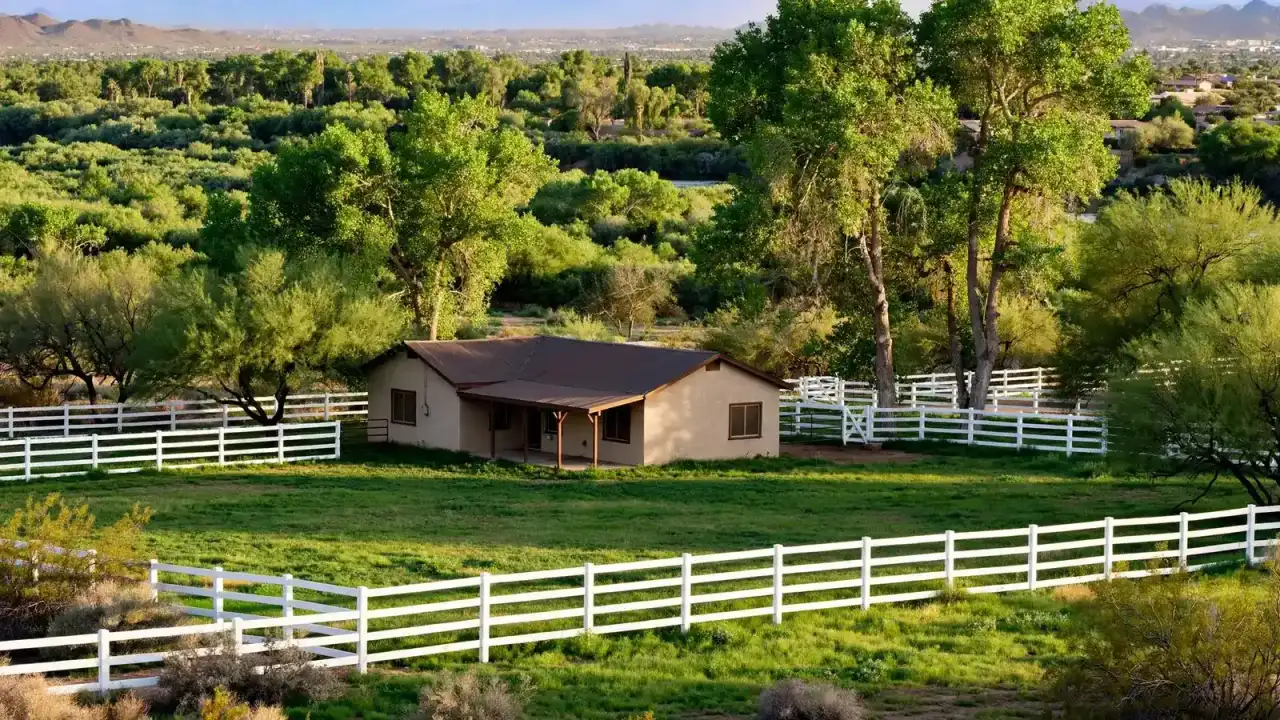
Lehi was settled in 1877 by pioneers who built along the Salt River and dug irrigation ditches to farm the valley, a year before Mesa's townsite was laid out on the mesa above [1]. The community was later absorbed into Mesa but has kept much of its rural character: large lots, horse properties, pasture irrigated by flood irrigation, barns, arenas and older farmhouses alongside newer custom homes.
That rural mix shapes fire restoration. Properties may have several structures, including barns, hay storage, workshops and guest houses, as well as animals that need care. Older farmhouses may have been added onto over many decades. Irrigation and drainage affect drying.
Property types
Lehi property details that affect restoration
Barns and hay storage
Hay and bedding burn intensely and smoulder for a long time.
Older farmhouses
Additions built over decades; older wiring and materials.
Newer custom homes
Modern construction on large lots.
Workshops and equipment
Fuel, tools and machinery stored on site.
Flood irrigation
Scheduled water that can reach damaged structures.
Animals
Horses and livestock need moving and care during a fire.
Outbuildings
Barn and hay fires
Hay that is baled or stored before it is fully dry can heat up as it ferments, sometimes enough to ignite on its own. Barns also hold bedding, feed, fuel, equipment and electrical wiring that may be exposed to dust and rodents. Barn fires spread quickly and can smoulder in hay for a long time after the flames are out.
A barn fire can send heavy smoke into a nearby house even when flames never reach it. After any barn or outbuilding fire, check the house for smoke inside, especially if windows were open or an evaporative cooler was running. Burned hay and debris often need heavy equipment to remove safely.
Assessment
What a contractor should check on a Lehi property
- 1
Every structure
House, barn, workshop, guest house and garage.
- 2
Electrical (Lehi)
Older farmhouse wiring and outbuilding circuits.
- 3
Older materials (Lehi)
Paint and suspect materials tested before disturbance.
- 4
Irrigation and drainage
Water reaching damaged structures.
- 5
Cooling systems
Evaporative coolers and refrigerated air.
- 6
Debris
Hay, equipment and hazardous materials.
What you might see
Lehi fire damage clues
| What you notice | Likely reason | What to ask |
|---|---|---|
| Smoke smell in the house after a barn fire | Smoke drifted from the outbuilding | Will the house be cleaned too? |
| Smouldering hay days later | Heat deep in hay bales | Tell the fire department immediately |
| Water pooling by the foundation | Irrigation near damaged areas | Can irrigation be paused? |
| Peeling paint on an old farmhouse | Heat on old paint layers | Will lead-safe methods be used? |
| Smoke at the cooler vents | Cooler drew smoke inside | Replace pads and clean ducts? |
| Charred workshop | Fuel and equipment fire | Who removes hazardous items? |
Restoration
How restoration usually runs in Lehi
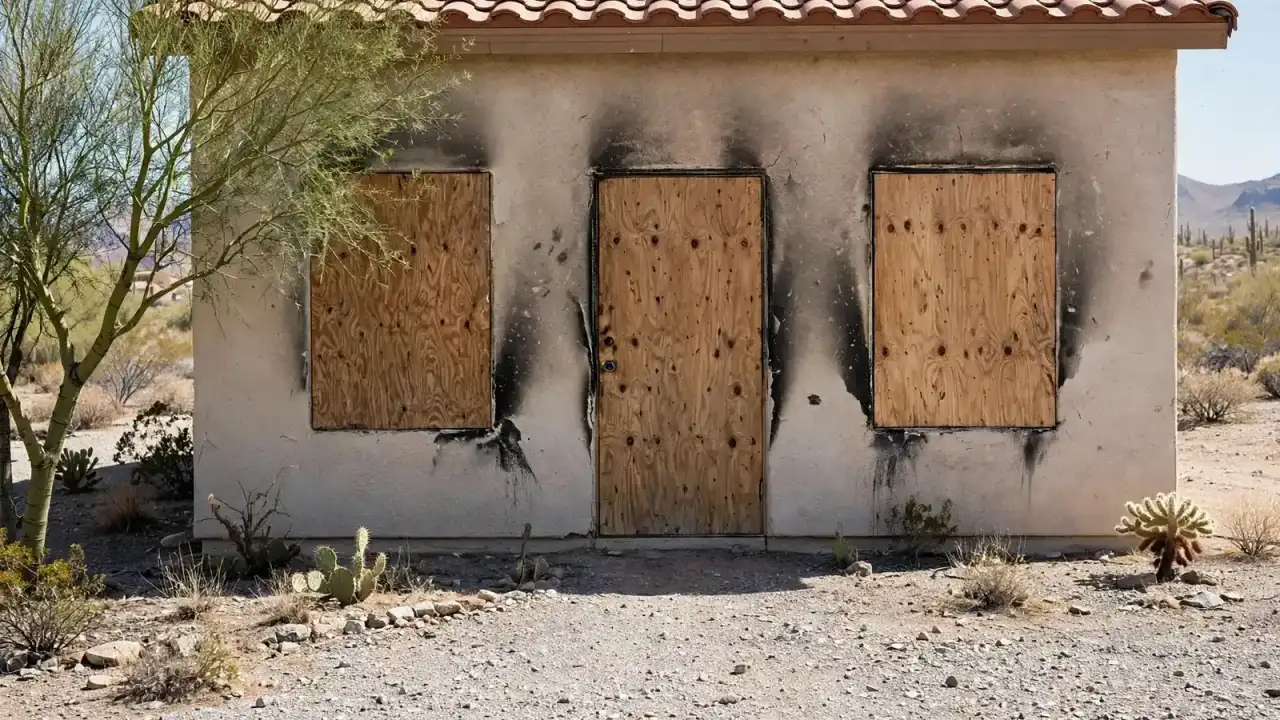
Securing the property may include temporary fencing around burned structures as well as boarding windows and tarping roofs. Drying addresses the house and any wet structures, with irrigation paused near damaged areas. Cleaning covers the house for smoke from any fire on the property. Debris from barns and workshops is removed with care for hazardous materials. Repairs need City of Mesa permits for regulated work, including rebuilding outbuildings.
Animals
Animals during and after a fire
Horses and livestock can panic during a fire. If it is safe, move animals well away from smoke and flames, and never re-enter a burning barn. After the fire, have a veterinarian check animals for smoke inhalation and burns.
Feed and bedding exposed to smoke or water should be discarded. Animals may need temporary housing elsewhere while barns are repaired; neighbors and local equine groups often help.
- Move animals away from smoke
- Never re-enter a burning barn
- Have a vet check animals
- Discard smoky feed and bedding
Older homes
Older farmhouses and additions
Some Lehi homes began as small farmhouses decades ago and have been added onto many times. Each addition may use different materials and connect to the original attic or roof in different ways, so smoke and water can travel along unexpected paths. Older sections may have older wiring and paint that may contain lead. A contractor should map the house by era, test older materials and have an electrician check circuits before power is restored.
Water
Irrigation, the river and drainage
Flood irrigation is part of life on many Lehi properties, with water delivered on a schedule. After a fire, consider skipping a delivery near damaged structures so water does not pool against opened walls or foundations. Monsoon storms can add runoff. Keep drainage clear and protect opened areas until repairs are complete.
Outside fires
Brush and river-bottom fires
Brush along the Salt River corridor and dry vegetation on large lots can burn in hot, dry weather. Smoke from these fires can reach homes through windows and coolers. Clearing dry vegetation near structures, keeping hay stored away from the house and maintaining defensible space around barns reduce risk.
Prevention
Reducing fire risk on a Lehi property
- Store hay dry and ventilatedCheck bales for heat after storage.
- Keep barns tidy and wiring protectedDust and rodents damage wiring.
- Store fuel away from barns and the houseIn approved containers.
- Clear dry vegetationAround barns, the house and fences.
- Have an evacuation plan for animalsKnow where they can go.
Week one
A typical first week after a Lehi fire
- 1
Lehi day 1
Fire department release, animals safe, insurer notified, structures secured.
- 2
Lehi days 1-2
Water extracted; irrigation paused near damaged areas.
- 3
Lehi days 2-3
Older materials tested; debris and hazardous items identified.
- 4
Lehi days 3-5
Drying monitored; house cleaned for smoke from outbuildings.
- 5
End of the first Lehi week
Scope agreed for house and outbuildings.
Claims
Insurance for rural properties
Policies for rural properties may treat barns, workshops and other structures differently from the main house, and may have separate limits for outbuildings, equipment and feed. Read your policy and ask your insurer how each structure is covered. Photograph every structure and its contents before cleanup, and keep receipts for animal boarding and other added spending.
Services
Services Lehi property owners ask about
Smoke from barn fires
Cleaning the house after an outbuilding fire.
Read moreDrying near irrigation
Water and drainage after a fire.
Read moreSecuring burned structures
Board-up and fencing.
Read moreElectrical fire signs (Lehi)
Warning signs in older wiring.
Read more
Second structures
Guest houses and second dwellings
Many Lehi properties have a guest house, casita or caretaker's quarters in addition to the main house. These may have their own electrical service, cooling and septic connections. After a fire anywhere on the property, each dwelling should be checked for smoke and heat damage. If the main house is being restored, a guest house may serve as temporary housing, but only if it took no smoke and its utilities and cooling are safe.
Cooling
Evaporative coolers and older cooling
Older Lehi homes and outbuildings are more likely to use evaporative coolers, which pull outside air through wet pads into the house. If a barn, field or neighboring fire was burning, a running cooler may have drawn heavy smoke inside. Cooler pads hold smoke and should be replaced, and the cooler housing and ducts cleaned before use. Homes with both coolers and refrigerated air have two systems to check.
Rural utilities
Septic, wells and rural utilities
Some rural properties use septic systems and private wells. Fire and firefighting activity can affect wellheads, pump wiring, pressure tanks and septic components near structures. Heavy equipment used for debris removal can damage septic tanks and lines if driven over them. Mark these locations for the contractor and have a qualified technician check well pumps and electrical connections exposed to heat or water.
Clean or replace
What usually happens on Lehi properties
| Item | Usual outcome | Note |
|---|---|---|
| House with smoke from a barn fire | Cleaned and deodorized | Filters and cooler pads replaced |
| Burned barn | Debris removed, rebuilt | Permits required |
| Hay and feed exposed to smoke | Discarded | Not safe for animals |
| Older farmhouse paint | Lead-safe repair | Pre-1978 homes |
| Tack and leather | Cleaned and conditioned | Heat-damaged items replaced |
| Fencing near the fire | Repaired or replaced | Keep animals contained |
Debris
Debris removal on large lots
Barn and outbuilding fires leave large amounts of debris: burned framing, metal roofing, wet and charred hay, equipment and fencing. Removing it may require heavy equipment and multiple dumpsters. Contractors should plan routes that avoid septic systems, irrigation structures and pasture, and handle hazardous materials such as fuel, fertilisers and chemicals separately. Smouldering hay must be fully extinguished before removal; report any renewed smoke to the fire department.
Electrical
Older farmhouse electrical systems
Older farmhouses and outbuildings may have wiring added over many years, sometimes by owners rather than electricians, with long runs to barns and workshops. Fires in these systems can start inside walls or at connections in dusty outbuildings. After any fire, a licensed electrician should inspect the service, panels and circuits to all structures before power is restored.
Neighbors
Neighbors in a rural setting
Lehi neighbors are often spread out but connected by shared fences, irrigation and animals. A fire on one property can affect neighbors through smoke, embers and loose animals. Neighbors frequently help each other with animal care and temporary pasture after a fire. If a nearby property burns, check your own house and barn for smoke and your fences for damage.
Newer homes
Newer custom homes in Lehi
Alongside older farmhouses, Lehi has newer custom homes on large lots, some with horse facilities, arenas and guest houses. These homes are built to modern codes but may be large and spread out, with long attics, multiple cooling systems and high-end finishes. Restoration follows the same order as elsewhere, with extra attention to every structure on the property and to protecting finishes.
Workshops
Workshops, equipment and fuel
Lehi properties often have workshops with welding equipment, tools, fuel and machinery. Workshop fires can be intense and involve fuel and chemicals. After a workshop fire, hazardous items are identified and removed by professionals, the structure is assessed, and nearby buildings are checked for smoke. Tools exposed to heat may need replacing; hand tools often clean.
Property walk-through
Checking the whole property after a fire
- 1
Main house
Smoke, soot and water.
- 2
Guest house or casita
Smoke and utilities.
- 3
Barn and arena
Fire damage, hay and bedding.
- 4
Workshop and sheds
Hazardous materials and tools.
- 5
Fences and gates
Animal containment.
- 6
Utilities
Well, septic, irrigation and electrical service.
Climate
Heat, dust and monsoon in Lehi
Summer heat and dry vegetation raise fire risk on rural lots. Monsoon storms bring wind that can spread embers and dust that coats damaged interiors, plus heavy rain that can flood low areas near the river. Secure damaged structures quickly and keep drainage clear.
Claims
Records for a multi-structure claim
Photograph every structure and its contents before cleanup. Keep lists of equipment, tack, feed and tools. Ask your insurer how each structure is covered and what records they need. Keep receipts for animal boarding, hay replacement and temporary housing.
Equestrian lots
Horse properties and arenas
Many Lehi properties are built around horses, with barns, shade structures, arenas, tack rooms and hay storage. Tack rooms hold leather, blankets and equipment that absorb smoke easily. Arenas and pens can collect ash and debris after a fire. Shade structures near a fire may be damaged by heat. After a fire, check every structure that holds animals for damage before returning animals to it, and replace smoky feed and bedding.
Older materials
Older homes and lead paint
Farmhouses and older homes in Lehi may have lead-based paint on siding, trim, windows and doors, and some older materials may contain asbestos. Fire, water and repairs can disturb these. Contractors working on pre-1978 homes must follow lead-safe practices when disturbing painted surfaces above set limits, and suspect materials should be tested before demolition. [2] Keep young children and pregnant relatives clear of the work.
Rebuilding
Rebuilding barns and outbuildings
Rebuilding a barn or outbuilding after a fire involves debris removal, permits, design decisions and sometimes changes to meet current codes. Owners often use the opportunity to improve layout, wiring and fire safety: better hay storage, protected wiring, fire extinguishers at exits and separation between hay and the house. Ask your contractor and insurer how upgrades are handled, and keep animals housed elsewhere until the new structure is complete and inspected.
Changing area
Lehi's mix of old and new
Lehi has seen newer custom homes and subdivisions arrive alongside its older farms and horse properties. That means a single street may hold a century of building styles, from early farmhouses to recent custom builds. Contractors working in Lehi need to be comfortable with both: lead-safe practices and careful testing on older homes, and modern finishes and systems in newer ones.
When you call, describe your property's age, the structures on it and any animals, so the contractor can plan the right approach.
Temporary arrangements
Animal care while barns are repaired
While a barn is rebuilt, horses and livestock need somewhere safe to stay. Neighbors, boarding stables and local equine groups often help. Keep receipts for boarding, transport and replacement feed and bedding; some policies include them as part of the claim. Check that temporary pens and shade structures are safe and away from debris before animals return home.
FAQ
Lehi fire restoration questions
Does this line cover Lehi?
Yes. Rural lots in Lehi within ZIP codes 85201 and 85203 are covered, and calls connect to an independent restoration contractor who works there.
My barn burned but the house looks fine. Should I check it?
Yes. Smoke can enter through windows, vents and coolers.
Can hay really catch fire on its own?
Yes. Damp hay can heat as it ferments and ignite.
Should I pause flood irrigation after a fire?
Near damaged structures, yes, until they are dried and repaired.
Who removes burned hay and debris?
Contractors with suitable equipment; tell them about any hazardous materials.
Is lead paint a concern in my old farmhouse?
In homes built before 1978, it can be. Contractors should use lead-safe practices.
Are my animals affected by smoke?
They can be. Have a veterinarian check them after a fire.
Does insurance cover my barn?
Many rural policies cover outbuildings separately. Check your limits.
Do I need permits to rebuild a barn?
Rebuilding structures in Mesa generally needs City of Mesa permits.
Can smoky tack and saddles be cleaned?
Leather often cleans and conditions well; heavily heat-damaged items may need replacing.
Can smoke from a field fire get into my house?
Yes, especially through open windows and evaporative coolers.
Should my well pump be checked after a fire?
If heat or water reached it, have a qualified technician check it.
Can heavy equipment damage my septic system?
Yes. Mark tank and line locations for the contractor.
Is my guest house safe to live in?
Only if it took no smoke and its utilities and cooling are safe.
Do I need separate claims for my barn and house?
Usually one claim with separate coverage parts. Ask your insurer how they want each structure documented.
Can my arena footing be affected by a fire?
Ash and debris can contaminate footing; it may need cleaning or replacement.
Should I keep animals off burned pasture?
Yes, until debris is cleared and any hazards removed.
Can tack be cleaned after smoke?
Leather tack often cleans and conditions well; heat-damaged items are replaced.
Should I test my old farmhouse for lead paint?
Before sanding or scraping, yes, especially if children live there.
Can I rebuild my barn the same way?
Usually, though current codes and setbacks apply. Ask the City of Mesa what is required.
Should hay be stored in a separate building?
Separating hay from barns and the house reduces risk.
Do I need extinguishers in my barn?
Extinguishers near exits are a sensible precaution.
Can one contractor handle my house and barn?
Many can. Ask on your call whether they handle outbuildings and debris removal.
Does my older home need extra precautions?
Yes. Testing for lead paint and asbestos and an electrician's inspection are sensible.
Will insurance pay for boarding my horses?
Some rural policies include it; check your policy and keep receipts.
Can smoke affect my horses' feed?
Yes. Discard feed and bedding exposed to smoke or water.
Should I check my fences after a fire?
Yes, before animals go back out; heat can weaken wire and wood.
Do I need to tell the irrigation district?
If irrigation structures were damaged, contact the district that delivers your water.
Can ash affect my irrigated pasture?
Light ash usually washes in, but heavy debris should be cleared before animals graze there again.
Are older adobe walls in Lehi cleaned differently?
Yes. Adobe and plaster need gentle, low-moisture methods; ask the contractor about their experience.